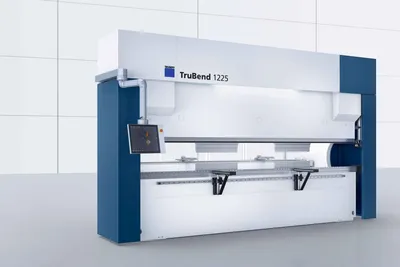
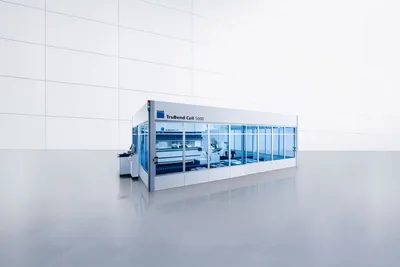
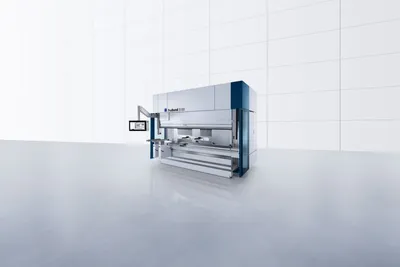
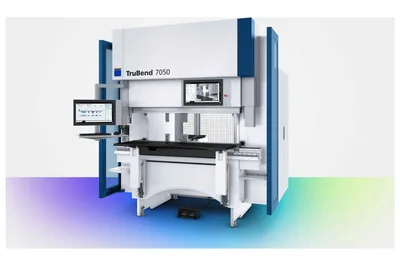
Trumpf TruBend Center Series 7000
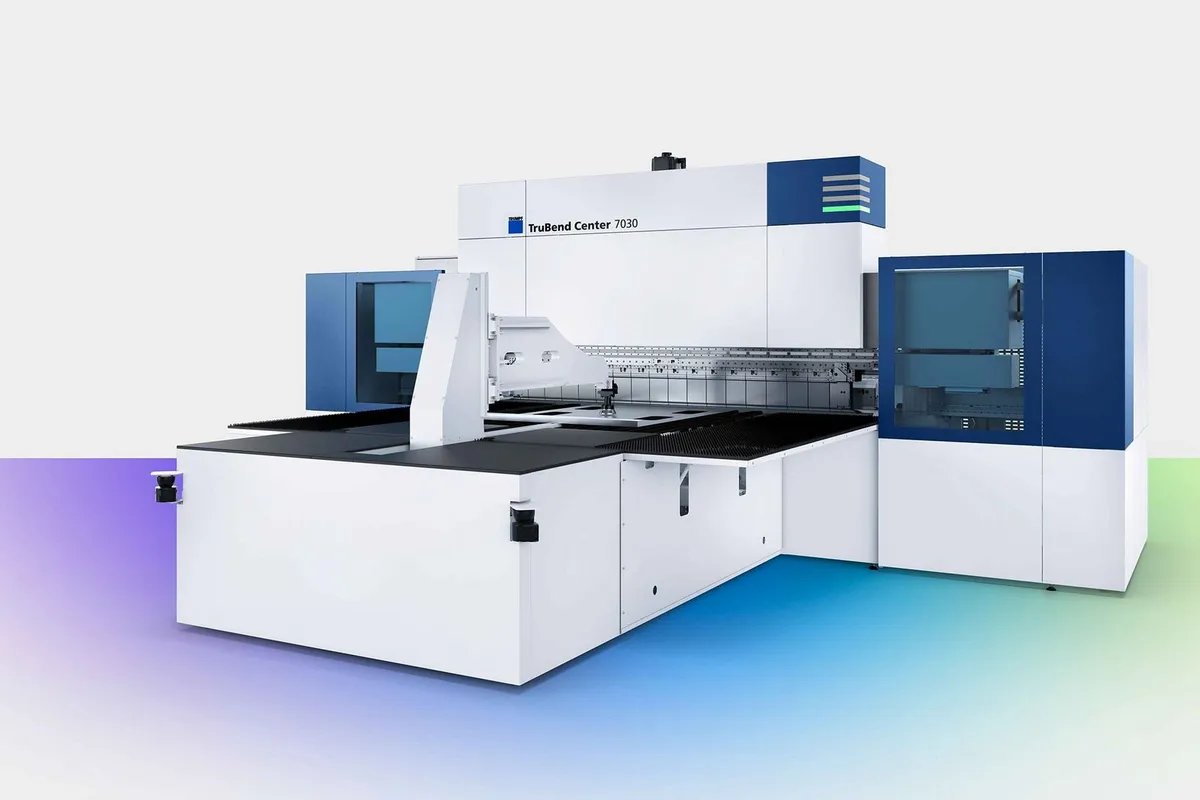
Image: trumpf.com, TRUMPF
Key Specifications
models
bending length 7020
bending length 7030
min bending length
max part size 7020
max part size 7030
How much does the Trumpf TruBend Center Series 7000 cost?
Estimated price range
Our best estimate for a cnc press brake in this class — not a quote from TRUMPF. Configuration moves it a long way.
Overview
The Trumpf TruBend Center Series 7000 consists of two bending centers that differ mainly in length: the TruBend Center 7020 with a bending length of 2,163 mm (85 in) and the TruBend Center 7030 with 3,123 mm (123 in). The thickness range is listed once for the series, from 0.4 mm (0.016 in) up to 3 mm in mild steel.
Choosing between the two is not only a question of part length, because the longer machine has the lower box. Maximum box height is 350 mm (13.8 in) on the 7020 and 220 mm (8.7 in) on the 7030. A deep tray or cabinet body that the 7020 can form may therefore be too tall for the 7030, even though the 7030 takes parts up to 3,120 x 1,500 mm (123 x 59 in) against 2,160 x 1,500 mm (85 x 59 in). Part width is 1,500 mm on both, and the shortest bend is 200 mm (7.9 in).
Every installation figure steps up with the longer model. The 7030 weighs 31,600 kg (69,665 lb) and the 7020 weighs 21,500 kg (47,400 lb), which makes the longer machine about 47% heavier for about 44% more bending length. Floor area goes from 5,200 x 4,855 mm to 6,490 x 5,327 mm, while height barely changes, 3,326 mm and 3,345 mm. The electrical connection rises from 53.4 kVA to 80 kVA and average consumption from 10 kW to 15 kW. Noise is listed at 73.4 dB for the 7020 and 78.8 dB for the 7030.
Material limits come with the strength they assume: 3 mm in mild steel (400 MPa), 2.2 mm in stainless steel (700 MPa) and 4 mm in aluminum (265 MPa). For a sense of scale, Trumpf's TruBend 5130 has a similar bending length of 3,230 mm (127 in) and weighs 11,800 kg (26,015 lb), so a bending center of this series is a far heavier installation for the same length of bend.
Full Specifications
| Parameter | Value |
|---|---|
| Models | TruBend Center 7020 / TruBend Center 7030 |
| Bending Length 7020 | 2,163 mm (85 in) |
| Bending Length 7030 | 3,123 mm (123 in) |
| Min Bending Length | 200 mm (7.9 in) |
| Max Part Size 7020 | 2,160 x 1,500 mm (85 x 59 in) |
| Max Part Size 7030 | 3,120 x 1,500 mm (123 x 59 in) |
| Max Box Height 7020 | 350 mm (13.8 in) |
| Max Box Height 7030 | 220 mm (8.7 in) |
| Max Thickness Mild Steel | 3 mm (400 MPa) |
| Max Thickness Stainless Steel | 2.2 mm (700 MPa) |
| Max Thickness Aluminum | 4 mm (265 MPa) |
| Min Thickness | 0.4 mm (0.016 in) |
| Machine Weight 7020 | 21,500 kg (47,400 lb) |
| Machine Weight 7030 | 31,600 kg (69,665 lb) |
| Dimensions 7020 | 5,200 x 4,855 x 3,326 mm (205 x 191 x 131 in) |
| Dimensions 7030 | 6,490 x 5,327 x 3,345 mm (256 x 210 x 132 in) |
| Power Consumption 7020 | 10 kW average (53.4 kVA connection) |
| Power Consumption 7030 | 15 kW average (80 kVA connection) |
| Noise Level 7020 | 73.4 dB |
| Noise Level 7030 | 78.8 dB |
| Maximum Bending Length | 2163 mm |
| Minimum Bending Length | 200 mm |
| Maximum Box Height | 350 mm |
| Maximum Part Size | 2160 mm x 1500 mm |
| Maximum Part Diagonal | 2640 mm |
| Minimum Bending Depth | 145 mm |
| Maximum Material Thickness Aluminum | 4 mm |
| Minimum Material Thickness | 0.4 mm |
| Length | 5200 mm |
| Width | 4855 mm |
| Height | 3326 mm |
| Min Hall Height | 4260 mm |
| Machine Weight | 21500 kg |
Specifications sourced from trumpf.com — verified 2026-10-03
Strengths & Limitations
Strengths
- Two bending lengths: 2,163 mm (85 in) on the TruBend Center 7020 and 3,123 mm (123 in) on the TruBend Center 7030
- Box height up to 350 mm (13.8 in) on the 7020
- Parts up to 3,120 x 1,500 mm (123 x 59 in) on the 7030
- Sheet from 0.4 mm (0.016 in), with aluminum up to 4 mm (265 MPa)
- The 7020 runs at 73.4 dB and averages 10 kW on a 53.4 kVA connection
Limitations
- Box height on the 7030 is 220 mm (8.7 in), lower than the 350 mm (13.8 in) of the shorter 7020
- Stainless steel stops at 2.2 mm (700 MPa) and mild steel at 3 mm (400 MPa)
- The 7030 weighs 31,600 kg (69,665 lb) and needs an 80 kVA connection
- The 7030 is louder, at 78.8 dB against 73.4 dB for the 7020
Best For
Frequently Asked Questions
01
Bending length is 2,163 mm (85 in) on the 7020 and 3,123 mm (123 in) on the 7030. Maximum part size is 2,160 x 1,500 mm against 3,120 x 1,500 mm. The 7020 has the higher box, 350 mm (13.8 in) against 220 mm (8.7 in). The 7030 is heavier, 31,600 kg (69,665 lb) against 21,500 kg (47,400 lb).
02
Up to 350 mm (13.8 in) on the TruBend Center 7020 and up to 220 mm (8.7 in) on the TruBend Center 7030. Check the side height of your tallest part against the model you are considering, because the machine with the longer bending length is the one with the lower box height.
03
Mild steel up to 3 mm at 400 MPa, stainless steel up to 2.2 mm at 700 MPa and aluminum up to 4 mm at 265 MPa. The minimum thickness is 0.4 mm (0.016 in). The strength figures are the reference for each limit, so a higher-strength grade should be checked with Trumpf before it is planned at full thickness.
04
The 7020 measures 5,200 x 4,855 x 3,326 mm (205 x 191 x 131 in), connects at 53.4 kVA and averages 10 kW. The 7030 measures 6,490 x 5,327 x 3,345 mm (256 x 210 x 132 in), connects at 80 kVA and averages 15 kW.
05
Trumpf lists a noise level of 73.4 dB for the TruBend Center 7020 and 78.8 dB for the TruBend Center 7030. The table does not state the measuring distance or operating condition behind those values, so treat them as a comparison between the two models and not as a workplace measurement.
Videos

TRUMPFtube