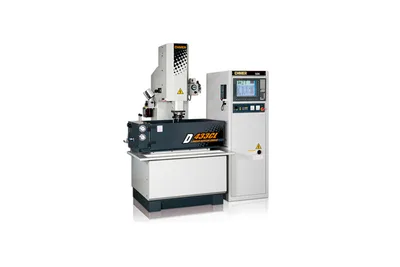
Mitsubishi Electric EA28V
This model was not found in Mitsubishi Electric's current lineup when we checked on 2026-10-03 (lineup page). It may be a superseded or older model; the specifications below are as we last recorded them.
Key Specifications
X Travel
Y Travel
Z Travel
Accuracy
work table size
max workpiece weight
How much does the Mitsubishi Electric EA28V cost?
Estimated price range
Our best estimate for a sinker edm (ram edm) in this class — not a quote from Mitsubishi Electric. Configuration moves it a long way.
Overview
The Mitsubishi Electric EA28V is a sinker EDM listed with a Digital Fuzzy Expert System (DFES) generator, a Mitsubishi ADVANCE controller and a workpiece weight limit of 400 kg (882 lb). Mitsubishi Electric's current lineup does not carry it under this name. One warning comes before anything else: the listed figures contain two sets of axis travels that disagree with each other, so no travel is quoted on this page, and the envelope of any machine on offer has to be taken from its own manual or measured. For reference, the EA28V Advance has travels of 650 mm (25.6 in), 450 mm (17.7 in) and 350 mm (13.8 in).
What the listed figures do agree on is the kind of work. Surface finish is given as Ra 0.18 µm achievable and positioning accuracy as ±0.001 mm, both of which point at fine-detail cavity work. The electrode limit is 25 kg (55 lb). Four electrode materials are named: graphite, copper, copper-tungsten and silver-tungsten, the last two normally kept for carbide and for fine detail.
The dielectric is oil with temperature control. Two items are listed as options, a rotary electrode spindle that serves as the C-axis and a 16-position AEC, so neither should be assumed on a particular machine. Supply is 200V three-phase at 50/60 Hz, and the machine weight is approx. 2,800 kg (6,173 lb).
Full Specifications
| Parameter | Value |
|---|---|
| X-Axis Travel | 280 mm (11.0 in) |
| Y-Axis Travel | 220 mm (8.66 in) |
| Z-Axis Travel | 270 mm (10.6 in) |
| Work Table Size | 450 x 350 mm (17.7 x 13.8 in) |
| Max Workpiece Weight | 400 kg (882 lb) |
| Max Electrode Weight | 25 kg (55 lb) |
| Generator | Digital Fuzzy Expert System (DFES) generator |
| Surface Finish | Ra 0.18 um achievable |
| Positioning Accuracy | ±0.001 mm |
| CNC Control | Mitsubishi ADVANCE controller |
| Dielectric | Oil dielectric with temperature control |
| Machine Weight | approx. 2,800 kg (6,173 lb) |
| C Axis | Optional rotary electrode spindle |
| X Y Travel | 600 x 400 mm (23.6 x 15.7 in) |
| Z Travel | 400 mm (15.7 in) |
| Max Workpiece Dimensions | 1000 x 700 x 400 mm |
| Electrode Changer | Optional 16-position AEC |
| Electrode Materials | Graphite, copper, copper-tungsten, silver-tungsten |
| Power Supply | 200V, 3-phase, 50/60 Hz |
Specifications compiled from manufacturer literature and industry references. Not independently verified against a published spec sheet — confirm with the manufacturer or an authorised dealer before making a purchasing decision.
Strengths & Limitations
Strengths
- Listed positioning accuracy of ±0.001 mm
- Surface finish of Ra 0.18 µm is listed as achievable
- Optional 16-position AEC for multi-electrode jobs
- Electrode materials listed include graphite, copper, copper-tungsten and silver-tungsten
- Oil dielectric with temperature control
Limitations
- The listed figures give two conflicting sets of axis travels, so the working envelope cannot be relied on from this table
- Both the 16-position AEC and the rotary electrode spindle (C-axis) are options
- Electrode weight is limited to 25 kg (55 lb) and workpiece weight to 400 kg (882 lb)
Best For
Frequently Asked Questions
01
The listed figures do not settle this. They contain two different sets of X, Y and Z travels, so neither is quoted here. The EA28V Advance has travels of 650 mm (25.6 in), 450 mm (17.7 in) and 350 mm (13.8 in) with an 850 x 600 mm (33.5 x 23.6 in) table. For any machine sold as an EA28V, take the travels from its manual or measure them.
02
Surface finish is listed as Ra 0.18 µm achievable and positioning accuracy as ±0.001 mm, with a Digital Fuzzy Expert System (DFES) generator and oil dielectric under temperature control. The conditions behind the finish figure are not stated.
03
Two: a rotary electrode spindle for C-axis work and a 16-position AEC. Both are marked optional in the listed figures, so check whether a specific machine has them. The electrode weight limit is 25 kg (55 lb) either way.
04
The listed power supply is 200V, three-phase, 50/60 Hz, and the machine weight is approx. 2,800 kg (6,173 lb). The EA28V Advance, by comparison, has a total system weight of 5400 kg (11905 lb.), another sign that machines under this name differ and need checking individually.
Videos

Techgroup_ee

DoggyDog420
Community Discussions
Troubleshooting and problem-solving
Links to community discussions. Summaries are editorial — visit the original thread for full context.
More from Mitsubishi Electric
Mitsubishi Electric EA8PV
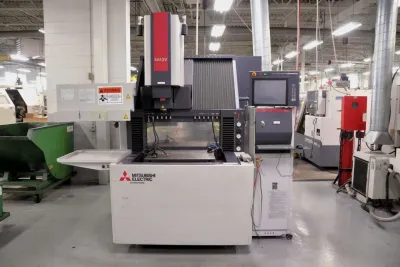
Mitsubishi EA12V
Mitsubishi Electric EA12 ADV
Mitsubishi Electric EA8PV Advance
Mitsubishi Electric EA12PS
Mitsubishi Electric EA12 Advance
Other Sinker EDM (Ram EDM)
GF AgieCharmilles FORM S 350
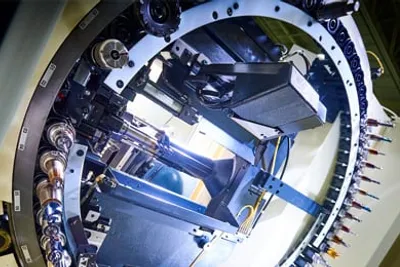
Makino EDNC-8
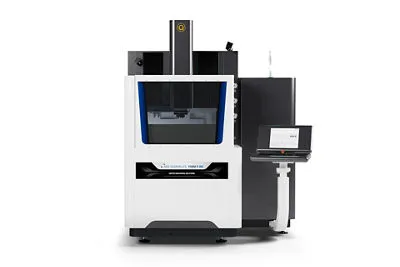
GF AgieCharmilles FORM P
Oscar EDM EX 2210-2H
GF Machining AgieCharmilles FORM X 400