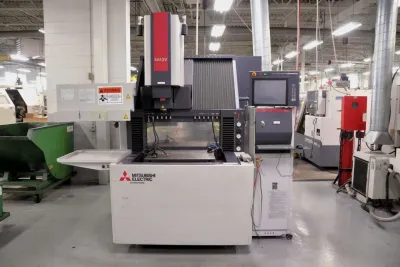
Makino EDFH-1
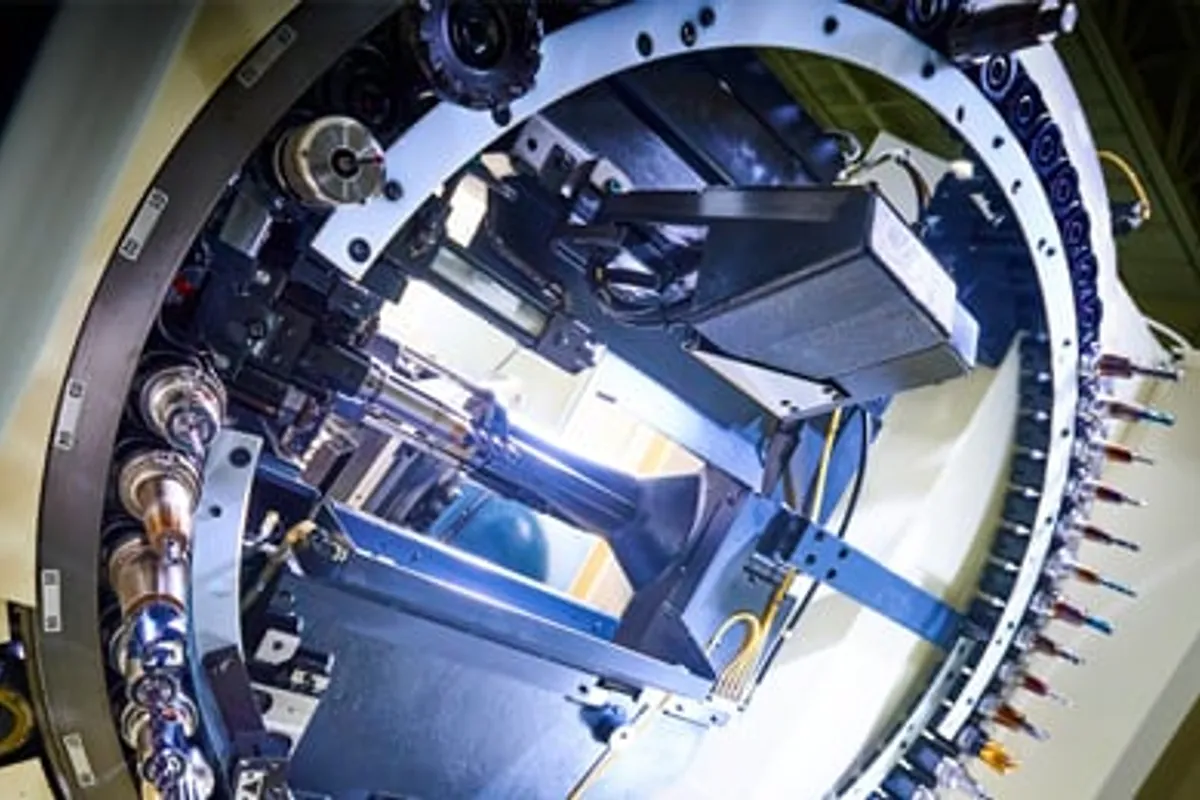
Image: makino.com, Makino
Key Specifications
X Travel
Y Travel
Z Travel
Tool Capacity
Table Size
max workpiece weight
How much does the Makino EDFH-1 cost?
Estimated price range
Our best estimate for a sinker edm (ram edm) in this class — not a quote from Makino. Configuration moves it a long way.
Overview
The Makino EDFH-1 is a compact EDM machine from Makino's hole-drilling range, with 220 x 180 x 300 mm (8.7 x 7.1 x 11.8 in) of X, Y and Z travel over a 350 x 250 mm (13.8 in x 9.8 in) table. It shares that table and its X and Y strokes with the EDAC1; the EDFH-1 has more Z, 300 mm (11.8 in) against 220 mm (8.66 in) on the EDAC1.
Makino's account of the machine is about holding precision over years of use. The construction includes alignment tolerances of 2 microns (0.00008”) or smaller over the full stroke of each axis. The work table is stationary, the dielectric reservoir is integrated into the base casting, and the heat of the electrical and generator cabinet is isolated from the machine structure.
The size limits are tight. Workpieces are rated at 50 kg (110 lb), and the work tank measures 450 x 350 x 200 mm (17.7 in x 13.8 in x 7.9 in), so its 200 mm (7.9 in) depth caps how tall a part can be while it is submerged. The tank is a programmable 3-sided rise-and-fall design, which opens three sides for loading. Tool capacities of 8 and 16 are listed.
The Hyper-i control uses a large high-definition 24” class touch screen and supports customization and remote monitoring options. It carries the E-Tech Doctor function and on-board machine manuals with integrated training videos. The table gives no rapid traverse, generator current or electrode weight, so ask Makino for those before setting the EDFH-1 against other small EDM machines.
Full Specifications
| Parameter | Value |
|---|---|
| Table Size | 350 x 250 mm (13.8 in x 9.8 in) |
| X-Axis Travel | 220 mm (8.7 in) |
| Y-Axis Travel | 180 mm (7.1 in) |
| Z-Axis Travel | 300 mm (11.8 in) |
| Max Workpiece Weight | 50 kg (110 lb) |
| Tool Capacity | 8, 16 |
| Work Tank Size | 450 x 350 x 200 mm (17.7 in x 13.8 in x 7.9 in) |
Specifications sourced from makino.com — verified 2026-10-02
Strengths & Limitations
Strengths
- Alignment tolerances of 2 microns (0.00008”) or smaller over the full stroke of each axis
- 300 mm (11.8 in) of Z on the same 350 x 250 mm (13.8 in x 9.8 in) table as the EDAC1, which has 220 mm (8.66 in)
- Stationary work table, dielectric reservoir in the base casting and generator heat isolated from the structure
- Programmable 3-sided rise-and-fall work tank for loading access
- Hyper-i control on a 24” class touch screen with E-Tech Doctor and on-board manuals with training videos
Limitations
- Workpieces are limited to 50 kg (110 lb)
- The work tank is 200 mm (7.9 in) deep, which limits part height
- X and Y travels of 220 mm (8.7 in) and 180 mm (7.1 in) suit small parts only
- The table lists no rapid traverse, generator current or electrode weight
Best For
Frequently Asked Questions
01
Both have a 350 x 250 mm (13.8 in x 9.8 in) table with 220 mm of X and 180 mm of Y. The difference is Z: 300 mm (11.8 in) on the EDFH-1 against 220 mm (8.66 in) on the EDAC1. Choose the EDFH-1 when the electrode or the part needs the extra vertical stroke.
02
Workpieces up to 50 kg (110 lb). The work tank is 450 x 350 x 200 mm (17.7 in x 13.8 in x 7.9 in) and the table 350 x 250 mm (13.8 in x 9.8 in), so the 200 mm (7.9 in) tank depth is usually the first limit on a tall part.
03
Makino states alignment tolerances of 2 microns (0.00008”) or smaller over the full stroke of each axis. The design also isolates heat from the electrical and generator cabinet, integrates the dielectric reservoir into the base casting and uses a stationary work table.
04
The table lists tool capacities of 8 and 16. It does not say which is standard, and Makino's description of the machine does not cover the changer, so confirm the size on the quotation.
05
Makino's Hyper-i control on a large high-definition 24” class touch screen. It includes the E-Tech Doctor function and on-board machine manuals with integrated training videos, and supports customization and remote monitoring options.
Videos

Makino Inc.
More from Makino
Other Sinker EDM (Ram EDM)
Sodick K3HS
Sodick AL60G
CHMER CM1875C
GF AgieCharmilles Form P 600
Sodick AX350L