LVD Phoenix BV
Key Specifications
Accuracy
work area
laser type
laser power
bevel capability
max cutting thickness mild steel
Overview
The LVD Phoenix BV is a high-performance fiber laser cutting machine from LVD Group, the Belgian sheet metal machinery manufacturer headquartered in Gullegem, Belgium. The Phoenix BV represents LVD's flagship fiber laser platform for the 3015 work envelope, combining a high-brightness fiber laser source with LVD's proprietary Bevelhead cutting head technology that enables bevel cutting at angles up to 45 degrees without additional machine hardware. This built-in bevel capability positions the Phoenix BV for weld-prep and structural fabrication applications that typically require secondary chamfering operations after flat laser cutting.
LVD's Phoenix BV is built on a monocoque welded steel machine frame that LVD FEA-optimizes for rigidity and thermal stability. The machine uses a flying-optics motion system with linear drives on the primary axes, achieving rapid traverse speeds of up to 170 m/min and accelerations sufficient for dense nested programs on thin sheet. The fiber laser source is a high-brightness unit in the 6 kW to 15 kW range depending on configuration, with the beam delivered to the cutting head through a fiber optic cable. The Bevelhead cutting head can tilt from -45° to +45° to produce chamfered edges in a single machine pass.
LVD's CADMAN-L CAM and nesting software is tightly integrated with the Phoenix BV's machine control, providing an end-to-end workflow from imported CAD data to optimized nested programs with automatic process parameter selection. CADMAN-L's bevel programming module automatically generates the head tilt angles and cutting paths required to produce specified weld groove geometries, eliminating the manual programming complexity that bevel cutting would otherwise require. Remote monitoring and predictive maintenance through LVD's Connected Solutions platform provide production visibility and uptime protection.
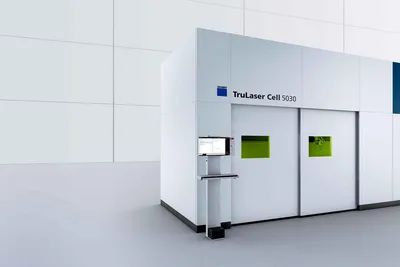
The Phoenix BV competes with the Trumpf TruLaser 5030 fiber with BevelLine and Bystronic ByStar Fiber with BevelLine options. LVD's advantage is the native Bevelhead integration as a standard machine feature rather than a retrofit option, and the CADMAN-L software's depth of bevel programming automation. Pricing ranges from $800,000 to $1,400,000 depending on laser power and automation configuration.
Full Specifications
| Parameter | Value |
|---|---|
| Work Area | 3,048 x 1,524 mm (120 x 60 in) |
| Laser Type | High-brightness fiber laser |
| Laser Power | 6,000 W - 15,000 W (configuration dependent) |
| Bevel Capability | Bevelhead: -45° to +45° tilt |
| Max Cutting Thickness Mild Steel | 30 mm (1.18 in) |
| Max Cutting Thickness Stainless | 20 mm (0.79 in) |
| Max Cutting Thickness Aluminum | 15 mm (0.59 in) |
| Max Bevel Thickness | 25 mm mild steel |
| Positioning Accuracy | ±0.03 mm (±0.0012 in) |
| Max Axis Speed | 170 m/min |
| Acceleration | 1.5 G (linear drives) |
| CNC Control | LVD CADMAN-L integrated control |
| Connectivity | LVD Connected Solutions IoT platform |
| Machine Weight | 16,000 kg (35,274 lb) |
Strengths & Limitations
Strengths
- Bevelhead cutting capability at -45° to +45° produces weld-prep chamfers in a single machine pass, eliminating secondary chamfering operations and reducing part lead time
- High-brightness fiber laser up to 15 kW enables industry-leading cutting speeds on thin sheet while maintaining thick-plate cutting capability
- CADMAN-L bevel programming automation eliminates the complex manual programming that bevel cutting would otherwise require — bevel paths are generated automatically from CAD geometry
- LVD's monocoque machine frame provides exceptional rigidity and thermal stability for consistent cut quality during extended production shifts
Limitations
- Price premium of $800K-$1.4M reflects Bevelhead and high-power capabilities — shops that don't need bevel cutting are paying for capability they won't use
- Bevelhead mechanical complexity adds maintenance requirements versus flat-cutting-only laser heads
- LVD is less prevalent in the North American market than Trumpf or Amada, with fewer service centers — European and Asian operations have better support access
Best For
Frequently Asked Questions
01
LVD's Bevelhead is a cutting head that can tilt its laser beam from -45° to +45° relative to the vertical. This enables the laser to cut chamfered edges — V-grooves, Y-grooves, and compound bevel profiles — in a single machine pass. Conventional laser cutting machines cut perpendicular to the workpiece surface, producing square edges that require secondary chamfering by plasma, oxyfuel torch, or machining to produce the beveled edges needed for full-penetration weld joints. The Bevelhead eliminates this secondary operation entirely.
02
The Phoenix BV with Bevelhead can produce V-groove (single bevel), Y-groove (single bevel with land), X-groove (double bevel), U-groove, and compound bevel profiles. The CADMAN-L software includes a bevel joint library that maps common weld joint geometries to the required cutting sequences and head angles. For custom bevel profiles, CADMAN-L's bevel programming module allows manual definition of the groove geometry with automatic path calculation.
03
LVD, Trumpf, and Bystronic are all European premium laser cutting machine manufacturers competing at the high-performance tier. Trumpf is the largest and most globally distributed, with the broadest product range. Bystronic focuses exclusively on sheet metal cutting and bending with deep software integration. LVD offers the broadest range of sheet metal equipment types (lasers, punches, press brakes, automation) from a single manufacturer. In bevel cutting specifically, LVD's native Bevelhead implementation is considered particularly capable. North American market share favors Trumpf and Amada; European markets see LVD with stronger presence.
04
The Phoenix BV is available in 6 kW, 10 kW, 12 kW, and 15 kW fiber laser configurations. Higher power levels increase cutting speed on thin sheet (where higher power translates directly to faster cutting speed) and extend maximum cuttable thickness. For thick-plate bevel cutting, higher power levels are particularly beneficial as the Bevelhead geometry reduces effective power density at the cut face. Most fabricators doing heavy structural work specify 10 kW or higher for adequate thick-plate bevel cutting performance.
05
Yes. LVD offers automation integration options for the Phoenix BV including raw sheet loading towers, automatic part sorting, and conveyor-based skeleton removal. LVD's CADMAN automation planning software coordinates the machine with attached automation hardware. For bevel cutting applications specifically, automation integration is somewhat limited compared to flat-cutting configurations due to the complexity of handling beveled parts. LVD's engineering team designs custom automation solutions for high-volume bevel cutting installations.
Videos

LVD Company

adrie bellers

WiCAM Benelux B.V.

GWB Machine tools

Bordoni Bonfiglio Srl
Community Discussions
Pricing and buying discussion — Amada, LVD, Bystronic, Mazak.. What can you choose to do???
Owner experience and review — Anyone with experience on a LVD Strippit SP series press ...
Troubleshooting and problem-solving — LVD Press Brake issues - Practical Machinist
Comparison and buying advice — LVD vs Mitsubishi fibre laser - Practical Machinist
Community discussion — LVD Phoenix Laser machine with Sinumeric 840SL control
Pricing and buying discussion — New Machine Build Prima Power Platino 6kW OR LVD Phoenix FL ...
Community discussion — CutLeader - CNCzone
Community discussion — Anyone familiar with an LVD mnc800 brake press/control?? (or ...
Links to community discussions. Summaries are editorial — visit the original thread for full context.
Related Machines
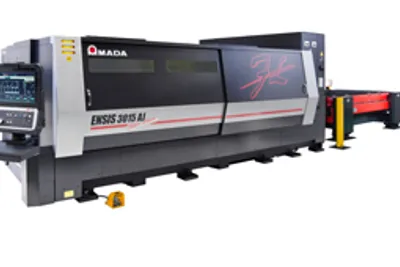
Amada ENSIS-3015AJ
Amada LCG-3015AJ
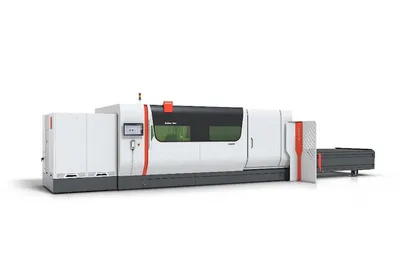
Bystronic ByStar Fiber 3015
Mazak OPTIPLEX 3015 DDL
Trumpf TruLaser 3040