Industrial CNC Machine Directory

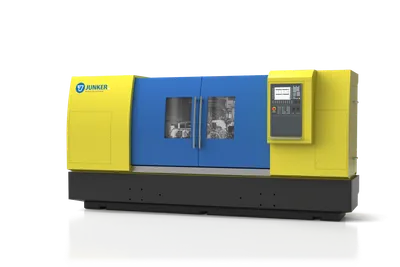
Junker JUMAT 3S

$350,000 - $500,000 Updated 2026-03-14
01

Key Specifications

Max Workpiece ⌀

350 mm (13.8 in)

Accuracy

0.001 mm (0.00004 in)

grinding type

OD/ID Cylindrical (CBN/Diamond high-speed)

center distance

600 mm (23.6 in)

max grinding length

400 mm (15.7 in)

center height

175 mm (6.9 in)

02

Overview

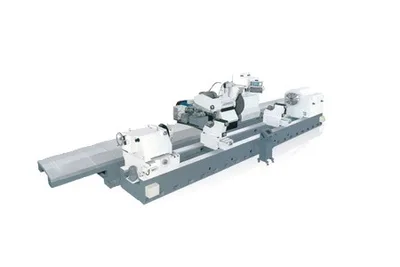
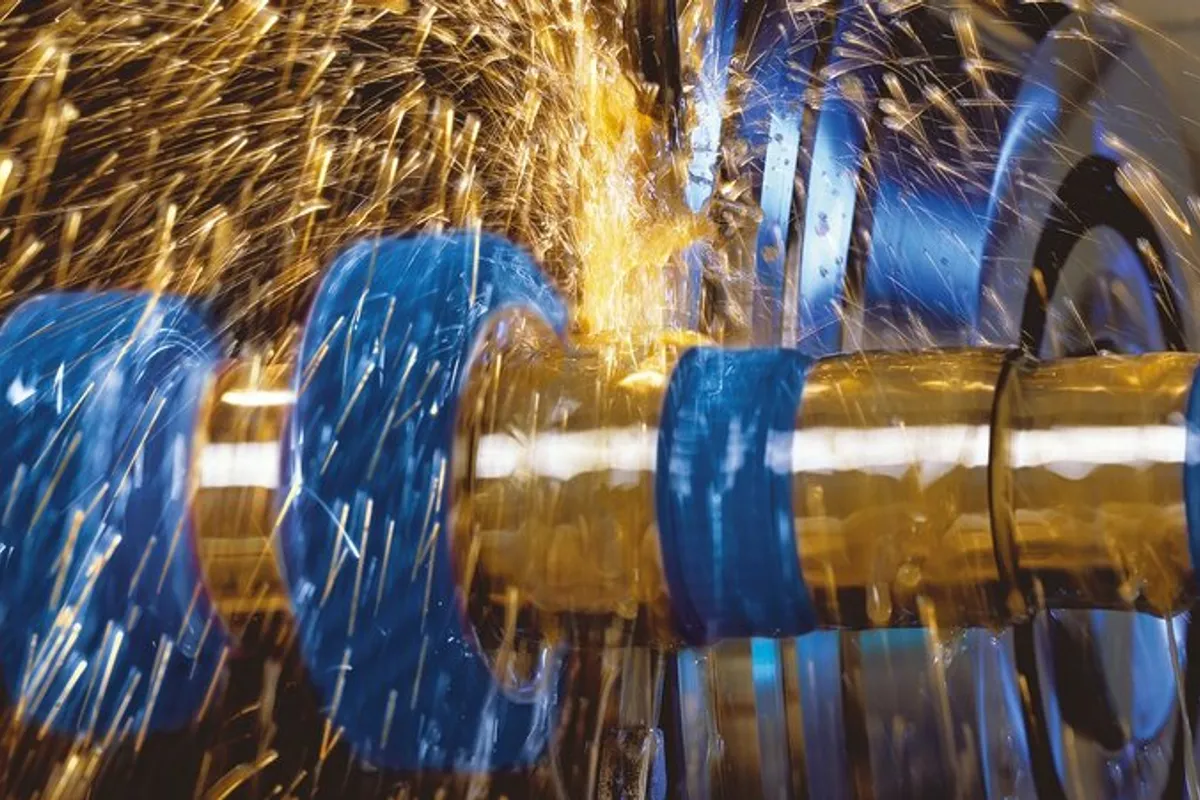
The Junker JUMAT 3S is a high-speed OD/ID cylindrical grinding machine designed for production-level throughput on shaft-type workpieces. Built by the Junker Group in Nordrach, Germany, the JUMAT line has been a staple in automotive and hydraulic component manufacturing for decades. The 3S variant uses CBN (cubic boron nitride) or diamond grinding wheels running at peripheral speeds up to 140 m/s, enabling aggressive stock removal rates that simply aren't achievable on conventional vitrified-wheel cylindrical grinders. If you're grinding camshafts, rotor shafts, hydraulic spools, or any cylindrical part in hardened steel at volume, this is the class of machine you need.

The machine architecture is built around Junker's proven point-of-use coolant delivery and direct-drive spindle technology. The grinding spindle produces up to 30 kW of continuous power, which keeps material removal rates high even on tough alloys like case-hardened 8620 or induction-hardened 4140. The workhead spindle supports speeds up to 3,000 RPM, with a hydrostatic workhead bearing design that eliminates the thermal growth issues common in roller bearing workheads during extended production runs. Center distance is 600 mm with a maximum grinding length of 400 mm, covering the vast majority of automotive and industrial shaft applications.

Junker equips the JUMAT 3S with their proprietary CNC control platform built on a Siemens Sinumerik 840D sl backbone. The grinding cycle programming is handled through Junker's own overlay software, which abstracts the complexity of multi-step grinding operations into a logical sequence of roughing, finishing, and spark-out passes. In-process gauging integration is standard, with closed-loop feedback automatically compensating for wheel wear and thermal drift. This keeps Cpk values above 1.67 on critical diameter tolerances without manual intervention.

The JUMAT 3S is engineered for 24/7 production environments. Automatic wheel balancing, integrated coolant filtration, and quick-change workholding fixtures minimize downtime between part runs. Cycle times on typical automotive shaft applications run 15-45 seconds depending on part complexity and the number of diameters being ground. At roughly $350,000-$500,000 depending on configuration and automation level, the JUMAT 3S competes directly with Studer S41/S33, Kellenberger 100, and Toyoda GL4Pi in the production cylindrical grinding segment.

03

Full Specifications

Parameter Value
Grinding Type OD/ID Cylindrical (CBN/Diamond high-speed)
Center Distance 600 mm (23.6 in)
Max Grinding Length 400 mm (15.7 in)
Center Height 175 mm (6.9 in)
Max Workpiece Diameter 350 mm (13.8 in)
Max Workpiece Weight 80 kg (176 lb) between centers
Grinding Wheel Speed Up to 140 m/s peripheral speed
Grinding Spindle Power 30 kW (40 hp) continuous
Workhead Speed Up to 3,000 RPM
CNC Control Siemens Sinumerik 840D sl with Junker overlay
Number Of Axes 4 CNC axes (X, Z, B, C)
Positioning Accuracy 0.001 mm (0.00004 in)
Machine Weight 7,500 kg (16,535 lb)
Machine Dimensions 3,800 x 2,200 x 2,100 mm (149.6 x 86.6 x 82.7 in)

Specifications sourced from junker-usa.com — verified 2026-03-28

04

Strengths & Limitations

Strengths

  • CBN/diamond high-speed grinding at up to 140 m/s enables aggressive stock removal rates that dramatically reduce cycle times on hardened steel components
  • Hydrostatic workhead bearings eliminate thermal growth issues during long production runs, maintaining tight tolerances without operator intervention
  • In-process gauging with closed-loop compensation keeps Cpk values above 1.67 on critical diameters throughout extended production shifts
  • 30 kW grinding spindle delivers enough power to maintain removal rates on tough case-hardened and induction-hardened alloys
  • Junker's proprietary grinding cycle software on the Sinumerik 840D sl simplifies programming of complex multi-step grinding sequences
  • Built for 24/7 production with automatic wheel balancing, integrated filtration, and quick-change workholding

Limitations

  • High acquisition cost of $350K-$500K limits the machine to high-volume production shops that can justify the investment through cycle time savings
  • CBN and diamond grinding wheels carry significant consumable costs compared to conventional vitrified wheels, impacting per-part economics on lower volumes
  • 600 mm center distance restricts the machine to small-to-medium shaft workpieces; longer shafts require the JUMAT 5000 or similar
  • Junker service network outside of Europe is thinner than Studer or Toyoda, which may affect response times in some North American regions
  • Specialized machine requires operators with high-speed grinding experience; not a drop-in replacement for conventional cylindrical grinders
05

Best For

Automotive powertrain manufacturers grinding camshafts, crankshaft journals, transmission shafts, and rotor components at production volumes Hydraulic component shops grinding spools, valve bodies, and pistons to tight tolerance requirements Production environments running 24/7 that need consistent Cpk values without constant operator adjustment Shops transitioning from conventional grinding to high-speed CBN processes for cycle time reduction Tier 1 and Tier 2 automotive suppliers needing to meet OEM tolerance and surface finish specifications on hardened steel components Any high-volume cylindrical grinding application where sub-30-second cycle times justify the machine investment
06

Frequently Asked Questions

01 What does a Junker JUMAT 3S cost?

New JUMAT 3S machines typically price between $350,000 and $500,000 depending on configuration, automation, and options. Pricing varies significantly based on the number of grinding spindles, automation packages, and in-process gauging configuration.

02 What is the difference between the JUMAT 3S and JUMAT 5000?

The primary difference is workpiece size capacity. The JUMAT 3S handles workpieces up to 600 mm center distance with 400 mm grinding length, while the JUMAT 5000 accommodates larger shafts. Both use the same high-speed CBN grinding technology and Sinumerik 840D sl control.

03 What wheel types does the JUMAT 3S use?

The machine is optimized for CBN (cubic boron nitride) and diamond grinding wheels running at up to 140 m/s. These superabrasive wheels provide dramatically longer wheel life and faster stock removal compared to conventional aluminum oxide or silicon carbide wheels.

04 Can the JUMAT 3S be automated?

Yes. Junker offers integrated automation solutions including gantry loaders and robotic part handling. The machine is designed for lights-out production with automatic wheel balancing, in-process gauging, and coolant management systems.

05 What surface finishes can the JUMAT 3S achieve?

The machine routinely achieves Ra 0.1-0.2 um on hardened steel components. With optimized CBN wheel specifications and spark-out cycles, finishes below Ra 0.1 um are achievable on select materials.

07

Videos

JUNKER | JUMAT | cylindrical grinding machines | gearshaft grinding

JUNKER | JUMAT | cylindrical grinding machines | gearshaft grinding

JUNKER Group

JUNKER | QUICKPOINT | cylindrical grinding machines

JUNKER | QUICKPOINT | cylindrical grinding machines

JUNKER Group

JUNKER | JUCAM | non-cylindrical grinding machines

JUNKER | JUCAM | non-cylindrical grinding machines

JUNKER Group

JUNKER | JUPITER | centerless grinding machines

JUNKER | JUPITER | centerless grinding machines

JUNKER Group

GrindingHub 2024 | Exhibition in Stuttgart | JUNKER Group

GrindingHub 2024 | Exhibition in Stuttgart | JUNKER Group

JUNKER Group

08

Community Discussions

09

Comparisons

10

Related Machines