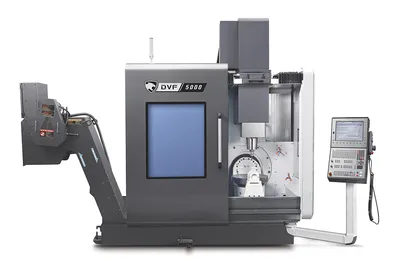
Handtmann PBT 130
Key Specifications
Spindle Taper
Rapid Traverse
Spindle Power
machine type
x travel
y travel
Overview
The Handtmann PBT 130 is a 5-axis vertical machining center from A. Handtmann Maschinenfabrik in Biberach, Germany, engineered specifically for the aerospace structural machining of lightweight aluminum alloys and carbon fiber reinforced polymers. The PBT 130 is designed around a 5-meter X-axis travel, a configuration that directly addresses the panel and rib dimensions of commercial and military aircraft structural components — the slot in the market that Handtmann has occupied with their PBT series since the mid-2000s and for which they have become a recognized specialist.
The PBT 130's machine concept prioritizes large working envelope, high material removal rate in aluminum, and simultaneous 5-axis access to complex structural aerospace geometry over the compact footprint and workpiece flexibility of conventional VMC or 5-axis machining center designs. The moving gantry architecture places the workpiece on a fixed table with access for floor-level fixturing and crane loading of large aluminum billets, plate stock, and CFRP preform structures. The 5-axis head provides torque-motor-driven A and C axes for high-stiffness contouring, enabling aggressive 5-axis simultaneous cutting of pocket walls, rib flanges, and compound-angle spar cutouts that define aerospace structural machining programs.
Material removal rate in aerospace aluminum is a primary performance metric for the PBT 130. Handtmann specifies the machine's spindle and drive system to sustain high-feed milling at elevated chip load values on 7075 and 2024 aluminum alloy, maximizing the volume of aluminum removed per hour in the deep pocket and web machining sequences that dominate aerospace structural part programs. Coolant management for aluminum chip evacuation is engineered into the machine design, with high-pressure coolant through the spindle and chip conveyor systems capable of handling the large aluminum chip volumes produced in high-MRR aerospace structural programs.
The PBT 130 uses Siemens Sinumerik 840D sl as its standard control platform, providing full compatibility with the Siemens NX CAM, CATIA CAM, and Mastercam post-processor environments used at Tier 1 aerospace machining suppliers. Handtmann's aerospace focus means the PBT 130 comes with application knowledge specific to aluminum structural machining — fixturing concepts, process parameters, and tooling strategies developed from production installations at major European and North American aerospace manufacturers.
Full Specifications
| Parameter | Value |
|---|---|
| Machine Type | 5-axis gantry vertical machining center for aerospace structural aluminum |
| X Travel | 5,000 mm (196.9 in) |
| Y Travel | 1,800 mm (70.9 in) |
| Z Travel | 800 mm (31.5 in) |
| A Axis Range | +/- 110° |
| C Axis Range | 360° continuous |
| Spindle Speed | 30,000 RPM |
| Spindle Motor Power | 62 kW (83 hp) |
| Spindle Taper | HSK-A63 |
| Rapid Traverse Rate | 60 m/min |
| Feed Rate | Up to 20 m/min |
| Tool Changer | Automatic, 60-position |
| CNC Control | Siemens Sinumerik 840D sl |
| Frame | Moving gantry on precision linear guides, fixed table |
| Maximum Storage Duration 1 Day | Type: HTTP Cookie |
| Maximum Storage Duration 1 Year | Type: HTTP Cookie |
| Maximum Storage Duration Persistent | Type: HTML Local Storage |
| Maximum Storage Duration Session | Type: HTTP Cookie |
| Maximum Storage Duration 2 Years | Type: HTTP Cookie |
| Maximum Storage Duration 3 Months | Type: HTTP Cookie |
| Maximum Storage Duration 400 Days | Type: HTTP Cookie |
| Maximum Storage Duration 180 Days | Type: HTTP Cookie |
| Maximum Storage Duration 25 Years | Type: HTTP Cookie |
| Maximum Storage Duration 30 Days | Type: HTTP Cookie |
Specifications sourced from handtmann.us — verified 2026-03-28
Strengths & Limitations
Strengths
- 5-meter X-axis travel is purpose-sized for aerospace structural aluminum panel and rib dimensions, enabling single-setup machining of wing rib sections, spar segments, and fuselage frame panels without workpiece repositioning
- 62 kW high-torque spindle supports maximum material removal rate in aerospace aluminum at feed rates and chip loads that reduce cycle times on deep-pocket and web machining programs
- Torque-motor-driven A and C axes provide high-stiffness simultaneous 5-axis contouring capability for compound-angle pocket walls, rib flanges, and spar cutouts that characterize aerospace structural machining geometry
- Siemens Sinumerik 840D sl control is the standard platform at Tier 1 aerospace structural machining suppliers, ensuring post-processor compatibility and operator familiarity across the aerospace manufacturing supply chain
- Handtmann's dedicated aerospace structural machining focus provides application knowledge and process support specific to aluminum and CFRP structural programs that general-purpose machine builders cannot match
Limitations
- The PBT 130's 5-meter working envelope and aerospace structural focus make it a single-application investment — shops without substantial aerospace structural aluminum programs will find limited use cases that justify the acquisition cost
- At the $1.5M+ price point, the PBT 130 requires substantial aluminum structural machining volume and sustained aerospace program backlog to achieve acceptable return on investment compared to smaller 5-axis machining centers
- Handtmann's market presence is concentrated in European aerospace supply chains; North American aerospace suppliers may face longer service response times and higher support costs compared to locally established machine builders
Best For
Frequently Asked Questions
01
Commercial aircraft structural components — wing ribs, spar sections, fuselage frames, and floor beams — are long, slender parts with length dimensions that frequently approach or exceed 4 meters. A 5-meter X-axis travel on the Handtmann PBT 130 accommodates these components in a single setup, avoiding the accuracy and efficiency losses associated with repositioning long structural parts mid-program. Single-setup machining is critical for aerospace structural parts where datum control across the full part length determines dimensional conformance.
02
The Handtmann PBT 130 is optimized for aerospace-grade aluminum alloys including 7075-T6 and T7, 2024-T3 and T4, 6061-T6, and 7050-T7451. These are the primary structural aluminum alloys used in commercial and military aircraft structure. The machine's 62 kW spindle and high-feed drive system are specified to sustain productive chip loads in all common aerospace aluminum grades across the roughing, semi-finishing, and finishing operations that aerospace structural programs require.
03
Yes. The Handtmann PBT 130 is capable of machining CFRP composite structural panels, frames, and plates, including composite/titanium stack drilling operations common in aerospace structure assembly. CFRP machining requires different tooling, feed rates, and coolant strategies than aluminum, and the machine supports the dry routing and mist-cooled drilling approaches that aerospace CFRP machining specifications require. Dust extraction for composite chip management should be specified when ordering the machine for CFRP applications.
04
The PBT 110 (110 in the designation refers to 1,100 mm Y-travel in earlier Handtmann naming conventions) is a smaller-format machine than the PBT 130. The PBT 130 provides larger X and Y working envelope to accommodate longer and wider aerospace structural parts. For wing rib and spar applications where part length exceeds 4 meters, the PBT 130's 5-meter X-travel is the determining factor. For shorter structural parts and frame components, the PBT 110 may be the more appropriate machine with lower acquisition cost.
05
Aerospace structural panels on the PBT 130 are typically fixtured using modular clamping systems on the machine's fixed table, with datum reference from part machined datum holes or tool setting datums built into the fixture plate. Vacuum fixturing can be used for thin-web aluminum panel operations. For high-material-removal roughing operations on thick billets, mechanical clamping with dedicated fixture plates is standard to resist the cutting forces of aggressive aluminum removal. Handtmann application engineers can advise on fixturing concepts for specific aerospace part families.
Community Discussions
Troubleshooting and problem-solving — Handtmann CNC? - Practical Machinist
Community discussion — Hold-down "Combs" for Non-magnetic ...
Community discussion — Where to find instruction/parts manuals ...
Community discussion — Info on Fine Feed Handwheel for SBL 13? - Practical Machinist
Community discussion — G130/G131 = no effect whatsoever - CNCzone
Pricing and buying discussion — Garnet "Wand" removal systems, anyone try? (BART or ... - CNCzone
Owner experience and review — Heidenhain tool pocket table help - CNCzone
Community discussion — Probing in Heidenhain - cnczone.com
Community discussion — Allen Wrenches : r/Machinists - Reddit
Community discussion — CAPTO alternatives? : r/Machinists - Reddit
Community discussion — Best paint marker? : r/Machinists - Reddit
Owner experience and review — Water jet recommendations? : r/Machinists - Reddit
Links to community discussions. Summaries are editorial — visit the original thread for full context.
Related Machines
DMG Mori DMU 50
Haas UMC-750
Makino D500
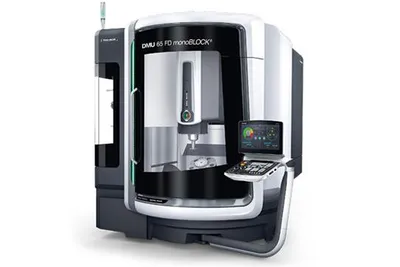
DMG Mori DMU 65 monoBlock
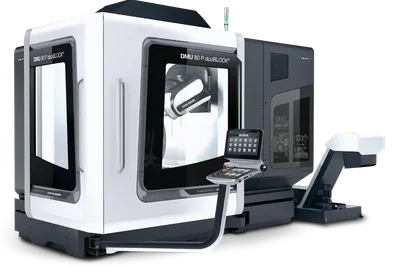
DMG Mori DMU 80P duoBLOCK