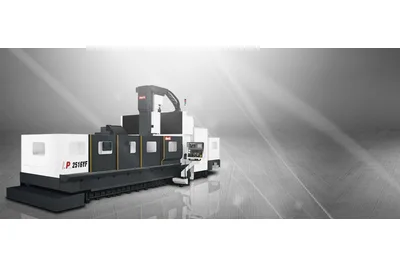
FANUC RoboNano a-0iB
Key Specifications
X Travel
Y Travel
Z Travel
b axis range
c axis range
spindle speed
How much does the FANUC RoboNano a-0iB cost?
Estimated price range
Our best estimate for a 5-axis machining center in this class — not a quote from FANUC. Configuration moves it a long way.
Overview
The FANUC RoboNano a-0iB is an ultra-precision 5-axis machine with a very small working envelope: 200 mm (7.87 in) of X travel and 100 mm (3.94 in) each in Y and Z, a B-axis range of ±30 degrees and a C-axis that rotates 360 degrees continuous. The listed figures put its positioning resolution at 1 nm (0.001 µm) and its form accuracy at ±0.1 µm.
Those two rows define what the machine is for. A surface finish of Ra 1-5 nm is listed for non-ferrous materials, which is the range where a cut surface can serve as an optical surface without polishing. Two ways of cutting are listed: a 50,000 RPM spindle for micro-milling, and single-point diamond tool capability on the C-axis for turning. The B and C axes are direct-drive, and the control is a FANUC 31i-B5 in a precision configuration.
The envelope is the first constraint. At 200 x 100 x 100 mm the machine takes small inserts and components, with the fixture and the tool sharing that space.
Installation is as much a part of the specification as the axes. The listed environment requirement is temperature control of ±0.1°C and a vibration-isolated foundation, and the machine weighs approximately 5,000 kg (11,023 lb) including its base. A room that cannot hold that temperature band will not return the listed form accuracy, so the room belongs in the plan from the start.
Full Specifications
| Parameter | Value |
|---|---|
| X-Axis Travel | 200 mm (7.87 in) |
| Y-Axis Travel | 100 mm (3.94 in) |
| Z-Axis Travel | 100 mm (3.94 in) |
| B Axis Range | ±30 degrees |
| C Axis Range | 360 degrees continuous |
| Spindle Speed | 50,000 RPM (micro-milling) |
| Slide Technology | Hydrostatic oil bearing (all linear axes) |
| Rotary Drive | Direct-drive (B and C axes) |
| Surface Finish | Ra 1-5 nm (non-ferrous materials) |
| Form Accuracy | ±0.1 µm |
| Positioning Resolution | 1 nm (0.001 µm) |
| Diamond Turning | Single-point diamond tool capability (C-axis) |
| CNC Control | FANUC 31i-B5 (precision configuration) |
| Environment Requirement | Temperature control ±0.1°C, vibration-isolated foundation |
| Machine Weight | Approximately 5,000 kg (11,023 lb) including base |
Specifications compiled from manufacturer literature and industry references. Not independently verified against a published spec sheet — confirm with the manufacturer or an authorised dealer before making a purchasing decision.
Strengths & Limitations
Strengths
- Positioning resolution of 1 nm (0.001 µm) with a listed form accuracy of ±0.1 µm
- Surface finish of Ra 1-5 nm listed for non-ferrous materials
- 50,000 RPM spindle for micro-milling, plus single-point diamond tool capability on the C-axis
- Direct-drive rotary axes: ±30 degrees on B and 360 degrees continuous on C
Limitations
- Travels are 200 mm (7.87 in) in X and 100 mm (3.94 in) in Y and Z, so only small parts fit
- Needs temperature control of ±0.1°C and a vibration-isolated foundation
- The Ra 1-5 nm finish is listed for non-ferrous materials only
- B-axis range is limited to ±30 degrees
Best For
Frequently Asked Questions
01
The listed surface finish is Ra 1-5 nm in non-ferrous materials, with a form accuracy of ±0.1 µm and a positioning resolution of 1 nm (0.001 µm). The finish figure is given for non-ferrous materials only, so do not assume it for steels.
02
Travels are 200 mm (7.87 in) in X, 100 mm (3.94 in) in Y and 100 mm (3.94 in) in Z. The B-axis tilts ±30 degrees and the C-axis rotates 360 degrees continuous. The part, its fixture and the tool all have to fit inside that envelope.
03
The listed environment requirement is temperature control of ±0.1°C and a vibration-isolated foundation. The machine weighs approximately 5,000 kg (11,023 lb) including its base, so the floor and the temperature-controlled room need planning before delivery.
04
Going by the listed figures, yes. A 50,000 RPM spindle is listed for micro-milling, and single-point diamond tool capability is listed on the C-axis. Both run under a FANUC 31i-B5 control in a precision configuration.
More from FANUC
FANUC RoboDrill a-D21MiB5 5-Axis
FANUC RoboDrill a-D14MiB5
FANUC RoboDrill a-D21SiB5 ADV Plus
Fanuc Robodrill α-D21LiA5

FANUC Robodrill α-D21MiB5 Plus

FANUC RoboCut α-C600iC
Other 5-Axis Machining Centers
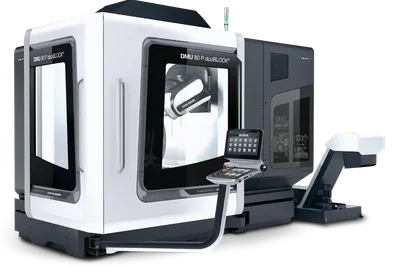
DMG Mori DMU 80P duoBLOCK
GF Machining Liechti Turbomill 1400g
Starrag LX 051
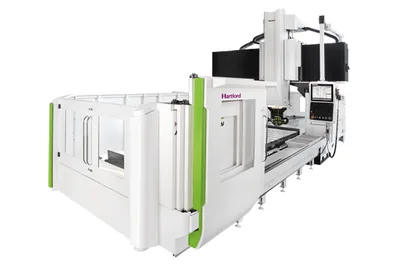
Hartford HSA-532EAY
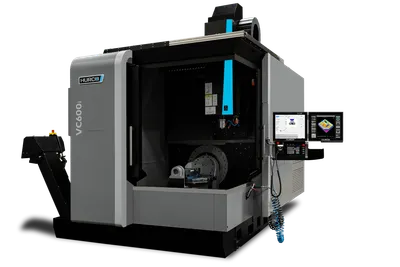
Hurco VC600i