Industrial CNC Machine Directory

EMAG VL 3 DUO

$400,000 - $600,000 (estimated) Updated 2026-03-19
EMAG VL 3 DUO CNC Lathes
01

Key Specifications

X Travel

505 mm (20 in)

Z Travel

250 mm (10 in)

Max Spindle

5,000 RPM

Max Workpiece ⌀

150 mm (6 in)

max workpiece length

110 mm (4.5 in)

chuck diameter

210 mm (8.5 in)

02

Overview

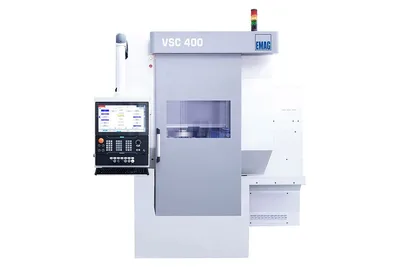
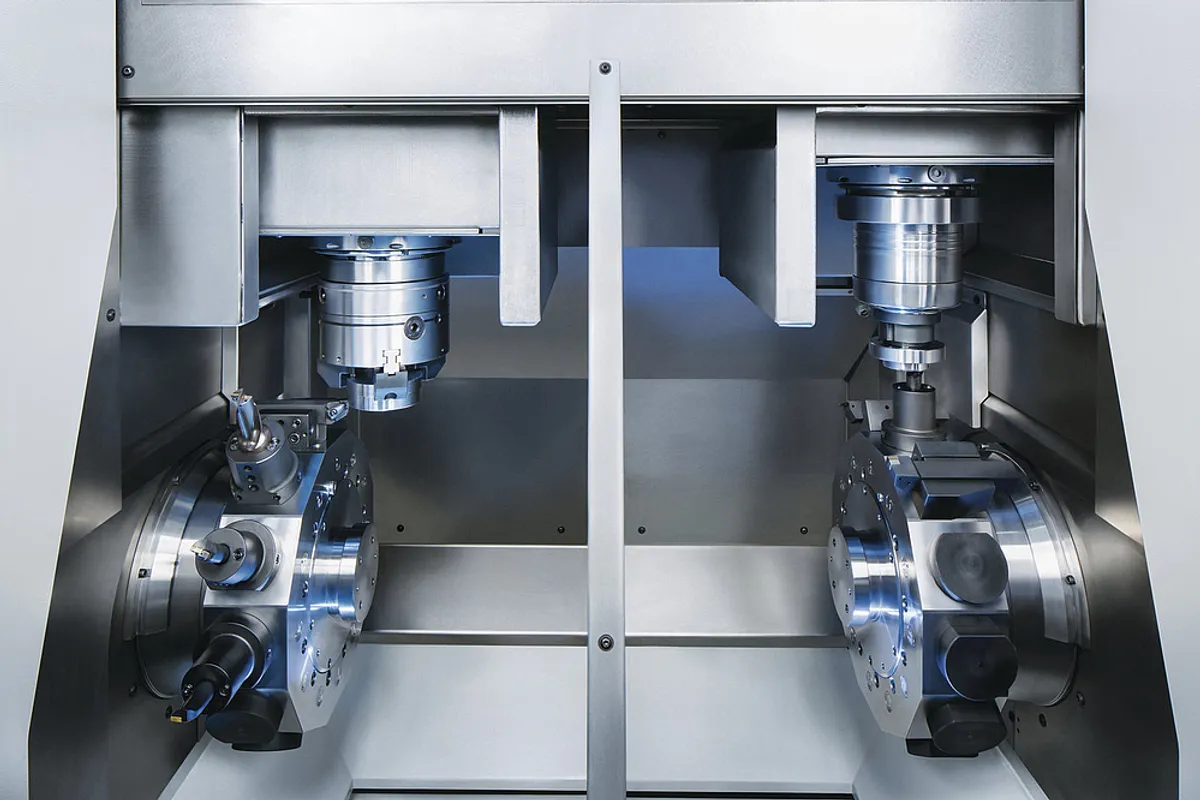
The EMAG VL 3 DUO is a twin-spindle vertical pick-up turning machine engineered for high-throughput production of chucked components up to 150 mm in diameter. By doubling up the machining stations on a single platform, the VL 3 DUO effectively halves the per-part cycle time compared to a single-spindle VL machine, making it the go-to solution for automotive Tier 1 suppliers and bearing manufacturers running volumes in the hundreds of thousands per year.

Each spindle runs at up to 5,000 RPM with 17.9 kW (24 hp) at 40% duty cycle and 15.5 kW (21 hp) continuous. Torque ratings of 144 Nm at 40% and 98 Nm continuous are well-matched for the turning, drilling, and light milling operations typical on small chucked parts like gear blanks, bearing races, and valve components. The 210 mm chuck on each spindle handles workpieces up to 150 mm diameter and 110 mm length, which covers the sweet spot of high-volume automotive and industrial turned components.

The machine provides X-axis travel of 505 mm and Z-axis travel of 250 mm, with an optional Y-axis offering +/- 30 mm for off-center drilling and milling operations. Each spindle feeds a 12-position turret, allowing independent tool selection for OP10 and OP20 operations to run simultaneously. This dual-operation capability is the VL 3 DUO's primary competitive advantage: two complete machining operations happen in the time of one, with integrated part transfer between spindles eliminating manual handling.

The MINERALIT polymer concrete base provides 6-8x better vibration damping than cast iron, which is particularly important in a twin-spindle configuration where vibrations from simultaneous cutting could otherwise interfere. The inverted vertical spindle design ensures gravity-assisted chip evacuation on both stations. EMAG's pick-up automation concept handles loading, transfer between operations, and unloading without external robots, keeping the cell compact and the capital investment focused on productive machining rather than material handling.

New VL 3 DUO machines typically price between $400,000 and $600,000, reflecting the twin-spindle configuration. For shops currently running two separate single-spindle machines, the VL 3 DUO consolidates both operations into a single footprint with lower total cost and faster throughput.

03

Full Specifications

Parameter Value
Max Workpiece Diameter 150 mm (6 in)
Max Workpiece Length 110 mm (4.5 in)
Chuck Diameter 210 mm (8.5 in)
Max Spindle Speed 5,000 RPM
Spindle Power 40 Pct 17.9 kW (24 hp)
Spindle Power Continuous 15.5 kW (21 hp)
Spindle Torque 40 Pct 144 Nm (106 ft-lb)
Spindle Torque Continuous 98 Nm (72.5 ft-lb)
X-Axis Travel 505 mm (20 in)
Travel Y Optional +/- 30 mm (+/- 1 in)
Z-Axis Travel 250 mm (10 in)
Turret Stations 12 per spindle
Spindle Configuration Twin-spindle (dual simultaneous machining)
Machine Base MINERALIT polymer concrete
Workpiece Handling Integrated pick-up automation with part transfer
CNC Control Fanuc or Siemens
Workpiece Dia Max mmin
Workpiece Length Max mmin
Chuck Dia Max mmin
X Axis Travel mmin
Y Axis Travel mmin
Z Axis Travel mmin
Main Spindle Power Rating At 40 100 Duty Cycle kW (hp)
Main Spindle Torque At 40 100 Duty Cycle Nmft-lb
Main Spindle Speed Max rpm

Specifications sourced from emag.com — verified 2026-03-28

04

Strengths & Limitations

Strengths

  • Twin-spindle design runs OP10 and OP20 simultaneously, effectively halving per-part cycle time compared to single-spindle vertical lathes
  • Integrated part transfer between spindles eliminates manual handling and external automation for multi-operation sequences
  • 12-position turrets on each spindle allow independent tool selection for different operations running in parallel
  • Optional Y-axis (+/- 30 mm) enables off-center drilling and milling without secondary operations
  • MINERALIT polymer concrete base provides 6-8x better vibration damping than cast iron, critical for twin-spindle simultaneous cutting
  • Compact single-machine footprint replaces two separate machines plus transfer automation

Limitations

  • 150 mm maximum workpiece diameter limits the machine to small chucked components only
  • Higher capital cost ($400K-$600K) than two separate single-spindle lathes may not be justified at lower production volumes
  • Twin-spindle configuration adds complexity to setup and programming compared to standalone machines
  • EMAG's North American service network is smaller than mainstream Japanese and Korean lathe builders
05

Best For

Automotive Tier 1 suppliers producing transmission gears, synchronizer rings, and CV joint components in high volumes Bearing manufacturers machining inner and outer races requiring two turning operations in sequence Hydraulic component producers turning valve seats, pistons, and housing inserts under 150 mm diameter Production lines requiring OP10/OP20 turning sequences where consolidating two operations into one machine reduces floor space and handling Shops seeking to maximize spindle utilization by running two operations simultaneously on a single platform
06

Frequently Asked Questions

01 What is the difference between the EMAG VL 3 DUO and a standard VL 3?

The VL 3 DUO features twin spindles that machine two parts simultaneously, whereas the standard VL 3 has a single spindle. The DUO configuration allows OP10 and OP20 to run in parallel with integrated part transfer between stations, effectively doubling throughput in the same footprint. This makes the DUO ideal for multi-operation sequences on high-volume parts.

02 What production volumes justify the VL 3 DUO?

The VL 3 DUO is designed for high-volume production, typically 200,000 to several million parts per year. At lower volumes, a single-spindle VL 3 or conventional CNC lathe with a bar feeder may be more cost-effective. The DUO's economics improve rapidly with volume because the twin-spindle design cuts per-part cycle time roughly in half.

03 Can the VL 3 DUO perform milling and drilling operations?

Yes. Each 12-position turret supports driven tools for drilling, tapping, and light milling. The optional Y-axis with +/- 30 mm travel enables off-center drilling and milling operations, allowing many parts to be completed in a single setup without transfer to a machining center.

04 How does the pick-up automation work on the DUO?

Each inverted spindle picks up raw or in-process parts from an integrated conveyor or transfer station. The first spindle performs OP10, then transfers the part to the second spindle for OP20. Finished parts are deposited back on the output conveyor. No external robot or gantry loader is needed, which reduces cell complexity and cost.

07

Videos

VL 3 DUO - Multi-Spindle Machines for Highly-Productive Mfg - EMAG

VL 3 DUO - Multi-Spindle Machines for Highly-Productive Mfg - EMAG

EMAGLLC

VL 3 DUO – Doppelspindlige Drehmaschine für die hochproduktive Fertigung

VL 3 DUO – Doppelspindlige Drehmaschine für die hochproduktive Fertigung

EMAG

Machine in Focus: VL 3 DUO - Top performance in precision turning technology

Machine in Focus: VL 3 DUO - Top performance in precision turning technology

EMAGLLC

EMAG VL 3 F CNC Vertical Lathe

EMAG VL 3 F CNC Vertical Lathe

Surplex

Webinar - Double-Spindle Machine (VL 1 TWIN & VL 3 DUO) with Robotic Cell

Webinar - Double-Spindle Machine (VL 1 TWIN & VL 3 DUO) with Robotic Cell

EMAGLLC

08

Related Machines