EMAG G 375 H
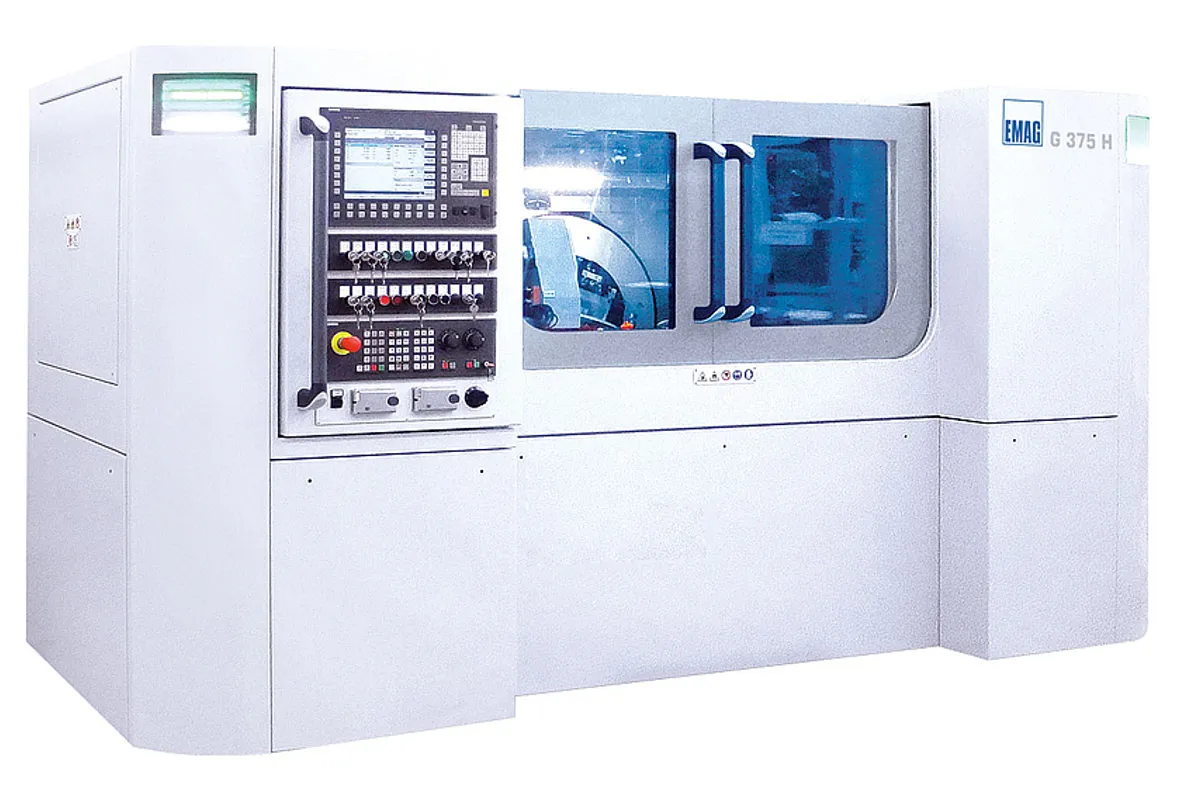
Image: cdn.emag.com, EMAG
Key Specifications
Max Workpiece ⌀
max workpiece length
max workpiece weight
max profile depth
tool spindle power
grinding spindle speed
How much does the EMAG G 375 H cost?
Estimated price range
Our best estimate for a cnc grinding machine in this class — not a quote from EMAG. Configuration moves it a long way.
Overview
The EMAG G 375 H is a gear grinding machine for large gears, rated for workpieces up to 375 mm (15 in) in diameter, 870 mm (34.5 in) long and 350 kg (771.5 lb) in weight, with modules from 0.5 - 15.0 mm and a maximum profile depth of 35 mm (1.4 in). The tool spindle is rated 23 kW (31 hp) and turns to 18,000 rpm.
The profile depth and module range define the work. A module of 15.0 mm is coarse industrial gearing, the kind found in heavy gearboxes and drives, and 35 mm (1.4 in) of profile depth gives room for the tall teeth that come with it. At the other end, 0.5 mm keeps fine-pitch parts within reach of the same machine, though a shop grinding only small gears would leave most of the envelope unused.
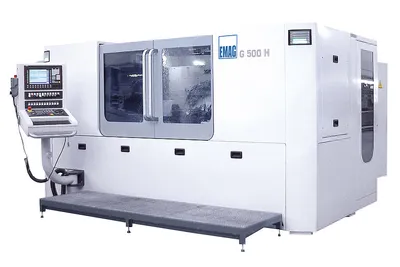
Center distance runs from 35 - 340 mm (1.5 - 13.5 in). That range sets how close the tool can come to the workpiece axis and how far it can back away, so it has to cover both the root of the smallest gear and the outside of the largest one on the job list. The 23 kW (31 hp) spindle is also stronger than that of the larger G 500 H, which lists 20 kW (27 hp) but a higher 32,500 rpm.
The machine weighs 11,000 kg (24,251 lb), so foundation and rigging need planning before delivery. The control is a Siemens 840 D sl. Against the G 500 H, which takes 500 mm (19.5 in) and 1,250 mm (49 in) parts up to module 22.0 mm, the G 375 H is the choice when the gears stay within 375 mm (15 in) and the higher spindle power counts.
Full Specifications
| Parameter | Value |
|---|---|
| Max Workpiece Diameter | 375 mm (15 in) |
| Max Workpiece Length | 870 mm (34.5 in) |
| Max Workpiece Weight | 350 kg (771.5 lb) |
| Max Profile Depth | 35 mm (1.4 in) |
| Tool Spindle Power | 23 kW (31 hp) |
| Grinding Spindle Speed | 18,000 rpm |
| Center Distance | 35 - 340 mm (1.5 - 13.5 in) |
| CNC Control | Siemens Simnumerik 840 D sl |
| Machine Weight | 11,000 kg (24,251 lb) |
| Module Range | 0.5 - 15.0 mm |
Specifications sourced from emag.com — verified 2026-10-03
Strengths & Limitations
Strengths
- Tool spindle rated 23 kW (31 hp), more than the 20 kW (27 hp) of the G 500 H
- Module range of 0.5 - 15.0 mm with profile depths up to 35 mm (1.4 in)
- Workpieces up to 375 mm (15 in) in diameter, 870 mm (34.5 in) long and 350 kg (771.5 lb)
- Center distance of 35 - 340 mm (1.5 - 13.5 in)
- Grinding spindle speed up to 18,000 rpm
Limitations
- Weighs 11,000 kg (24,251 lb), so foundation and rigging must be planned
- Spindle speed tops out at 18,000 rpm, against 32,500 rpm on the G 500 H
- Workpiece weight is capped at 350 kg (771.5 lb)
- No accuracy figure is listed
Best For
Frequently Asked Questions
01
Up to 375 mm (15 in) in diameter, 870 mm (34.5 in) long and 350 kg (771.5 lb). Modules run from 0.5 - 15.0 mm with a maximum profile depth of 35 mm (1.4 in).
02
It is rated 23 kW (31 hp) with a maximum speed of 18,000 rpm. The larger G 500 H lists less power, 20 kW (27 hp), but a higher speed of 32,500 rpm.
03
Start with part size. The G 500 H takes 500 mm (19.5 in) diameter, 1,250 mm (49 in) length and modules to 22.0 mm. If the parts fit within 375 mm (15 in) and 870 mm (34.5 in), the G 375 H does the job with more spindle power and a lighter machine of 11,000 kg (24,251 lb) against the 15,000 kg (33,069.5 lb) of the G 500 H.
04
The machine weighs 11,000 kg (24,251 lb), so check floor loading and the foundation before delivery. The table gives no footprint or power supply figure, so ask EMAG for the installation drawing.
More from EMAG
Other CNC Grinding Machines
Supertec G20P-40CNC
Palmary OCD-45150
Studer S31

Hardinge Kellenberger TM300