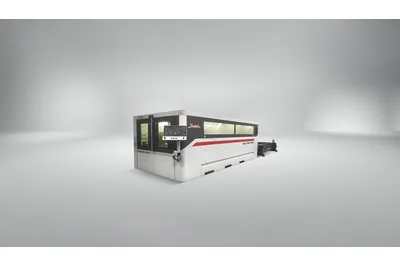
Amada VENTIS 3015 AJe
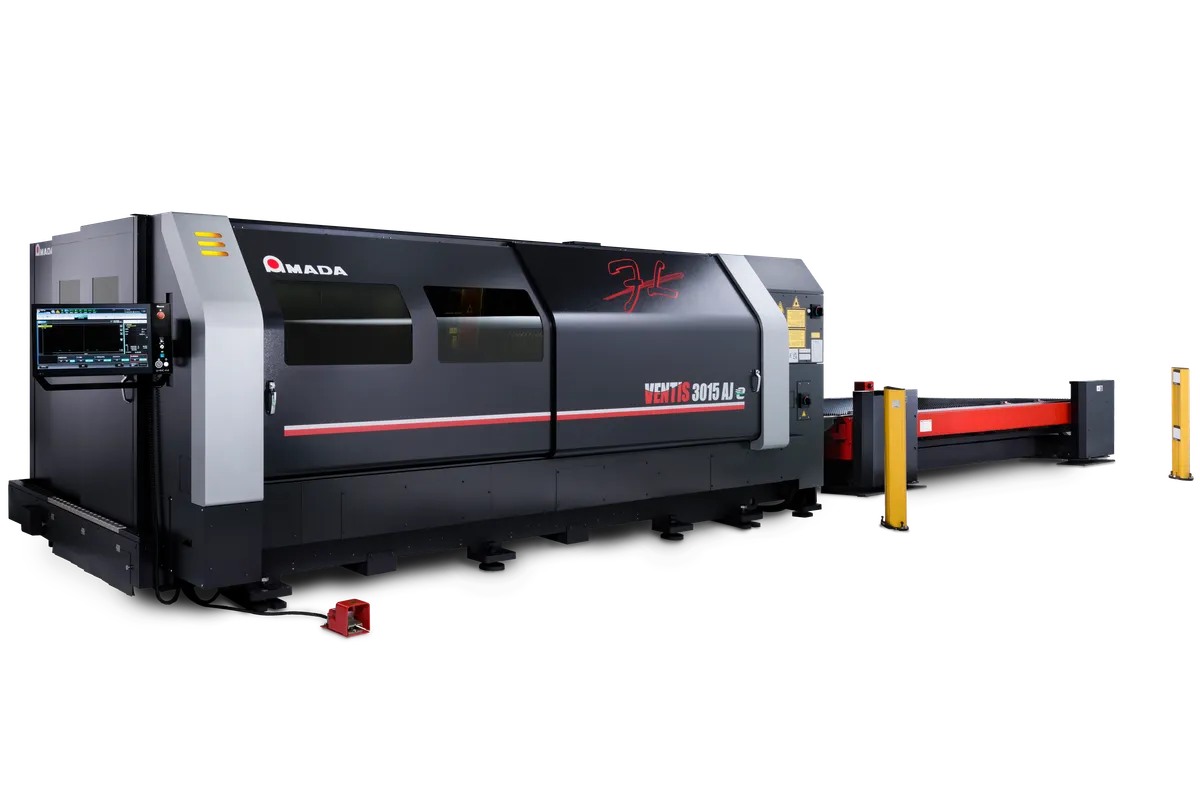
Image: amada.com, Amada
Key Specifications
laser power
machine type
working range x y
working range z
repeatable positioning accuracy
max table load
How much does the Amada VENTIS 3015 AJe cost?
Estimated price range
Our best estimate for a cnc laser cutting machine in this class — not a quote from Amada. Configuration moves it a long way.
Overview
The Amada VENTIS 3015 AJe is a fibre laser cutting machine with a 3070 x 1550 mm working range, helical rack and pinion drives and a choice of 4000 W, 6000 W or 9000 W. Table load is 920 kg and repeatable positioning accuracy is ± 0.01 mm.
The clearest way to read Amada's thickness table is one oscillator at a time. At 4000 W the machine is listed for 25 mm of mild steel, 20 mm of stainless steel, 15 mm of aluminium, 10 mm of brass and 8 mm of copper. Moving to 6000 W leaves mild steel at 25 mm but lifts stainless and aluminium to 25 mm, brass to 15 mm and copper to 12 mm. The 9000 W version adds 18 mm brass, and Amada shows 30 mm for both mild steel and stainless steel with the note that those two figures are to be confirmed. Aluminium and copper do not change between 6000 W and 9000 W.
That makes 4000 W a sound match for a shop whose thick work is carbon steel, since mild steel capacity is already 25 mm there. Stainless plate above 20 mm and aluminium above 15 mm are what call for 6000 W. The case for 9000 W rests partly on the unconfirmed 30 mm entries, so get them in writing if they matter to the order.
The footprint is 9511 mm long with the shuttle table, 2840 mm wide and 2236 mm high. Amada lists 8900 kg for the 4000 W machine and 9100 kg for the 6000 W, with the 9000 W weight still to be confirmed. The VENTIS 4020 AJe carries the same three oscillators on a 1570 kg table and weighs 12400 kg at 4000 W.
Full Specifications
| Parameter | Value |
|---|---|
| Laser Power | 4000 W / 6000 W / 9000 W |
| Machine Type | Fibre laser cutting machine |
| Working Range X Y | 3070 x 1550 mm |
| Working Range Z | 100 mm |
| Repeatable Positioning Accuracy | ± 0.01 mm |
| Max Table Load | 920 kg |
| Drive System | Helical rack and pinion |
| Max Thickness Mild Steel | 4000 W, 6000 W: 25 mm / 9000 W: 30 mm (to be confirmed) |
| Max Thickness Stainless Steel | 4000 W: 20 mm / 6000 W: 25 mm / 9000 W: 30 mm (to be confirmed) |
| Max Thickness Aluminium | 4000 W: 15 mm / 6000 W, 9000 W: 25 mm |
| Max Thickness Brass | 4000 W: 10 mm / 6000 W: 15 mm / 9000 W: 18 mm |
| Max Thickness Copper | 4000 W: 8 mm / 6000 W, 9000 W: 12 mm |
| Machine Length with Shuttle Table | 9511 mm |
| Machine Width | 2840 mm |
| Machine Height | 2236 mm |
| Machine Weight | 4000 W: 8900 kg / 6000 W: 9100 kg / 9000 W: TBC |
Specifications sourced from amada.eu — verified 2026-10-03
Strengths & Limitations
Strengths
- The entry-level 4000 W oscillator is already listed for 25 mm mild steel and 20 mm stainless steel
- 6000 W brings stainless steel and aluminium to 25 mm, brass to 15 mm and copper to 12 mm
- Helical rack and pinion drives with ± 0.01 mm repeatable positioning accuracy
- 8900 kg at 4000 W and 9100 kg at 6000 W, on a 9511 mm by 2840 mm footprint with the shuttle table
Limitations
- The 30 mm mild steel and stainless steel figures for 9000 W are marked to be confirmed
- Aluminium at 4000 W is limited to 15 mm, and copper to 8 mm
- Power stops at 9000 W, and the 9000 W machine weight is not yet published
- Copper stays at 12 mm from 6000 W to 9000 W
Best For
Frequently Asked Questions
01
Amada lists 25 mm in mild steel, 20 mm in stainless steel, 15 mm in aluminium, 10 mm in brass and 8 mm in copper. Mild steel does not gain anything at 6000 W, so 4000 W covers carbon steel work up to the same 25 mm.
02
Brass goes from 15 mm to 18 mm. Amada also shows 30 mm for mild steel and stainless steel at 9000 W, against 25 mm at 6000 W, but both 30 mm figures are marked to be confirmed. Aluminium stays at 25 mm and copper at 12 mm.
03
Both are offered with 4000 W, 6000 W and 9000 W. The VENTIS 3015 AJe has a 920 kg table load and weighs 8900 kg at 4000 W and 9100 kg at 6000 W. The VENTIS 4020 AJe has a 1570 kg table load and weighs 12400 kg at 4000 W and 12700 kg at 6000 W.
04
9511 mm long with the shuttle table, 2840 mm wide and 2236 mm high. The working range is 3070 x 1550 mm with 100 mm in Z. Weight is 8900 kg at 4000 W and 9100 kg at 6000 W. The 9000 W weight is to be confirmed.
Videos

AMADA AMERICA, INC.
More from Amada
Other CNC Laser Cutting Machines
Durma HD-TC 80220
Bodor P Series
Penta Laser BOLT CUBE 3015
Baykal BLE PRO