Amada HRB 8025/1003/2204
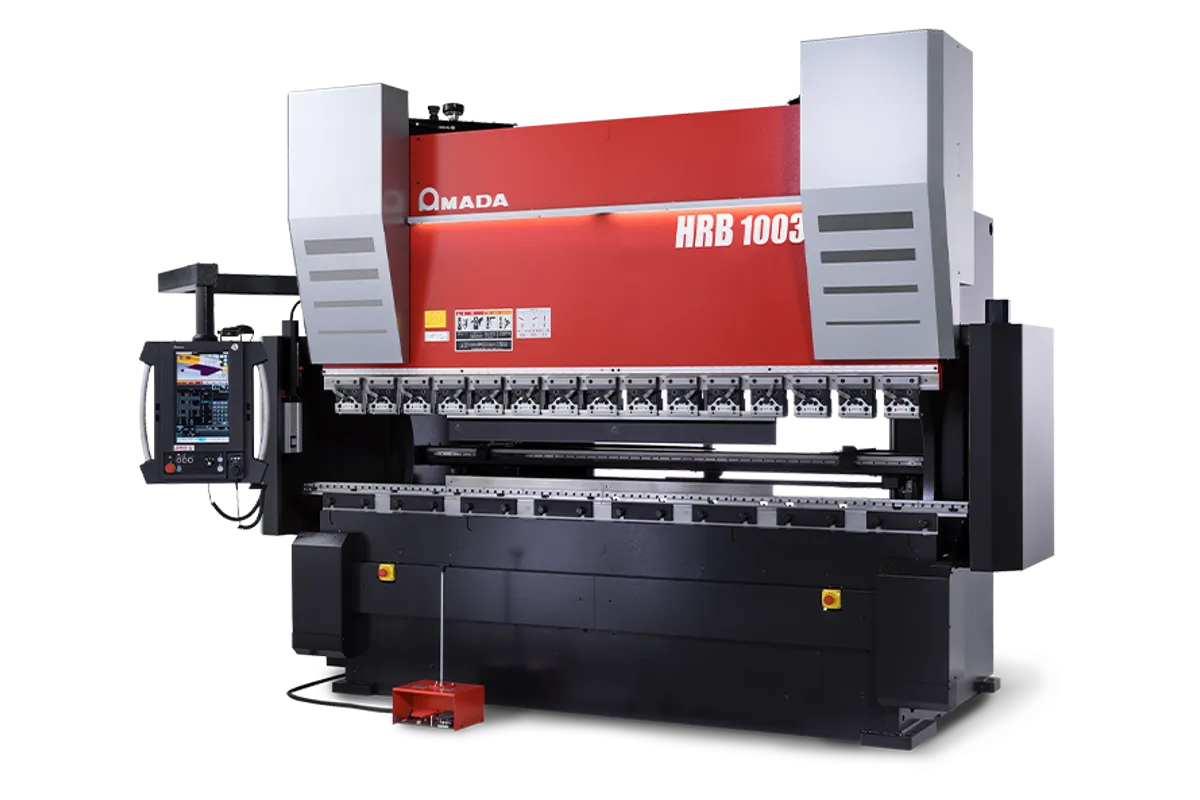
Image: amada.com, Amada
Key Specifications
tonnage range
hrb 8025 capacity
hrb 1003 capacity
hrb 2204 capacity
hrb 8025 bed length
hrb 1003 bed length
How much does the Amada HRB 8025/1003/2204 cost?
Price estimate
We do not have a price for the Amada HRB 8025/1003/2204 that we can stand behind, so we show no number. Configuration, options and installation move the final price a long way: a quote is the reliable figure.
Overview
The Amada HRB 8025/1003/2204 entry covers three sizes of one CNC press brake series, and the listed figures span 80 - 220 metric tons. The HRB 8025 is listed at 800 kN / 80 metric tons (90 US tons) on a 2,500 mm (98.4 in) bed, the HRB 1003 at 1,000 kN / 100 metric tons (112 US tons) on 3,100 mm (122 in), and the HRB 2204 at 2,200 kN / 220 metric tons (247 US tons) on 4,300 mm (169.3 in).
Force and bed length rise together, so choosing among the three is mostly a matter of part length and thickness. A shop bending small brackets and covers has no use for a 4,300 mm (169.3 in) bed, while long panels rule out the two shorter machines whatever the tonnage.
The remaining rows are given once for the whole series. The drive is listed as hybrid servo-hydraulic, with energy savings of up to 30% vs conventional hydraulic and a ram repeatability of ±0.01 mm (±0.0004 in). Approach and return are both 200 mm/sec (7.9 in/sec) and pressing runs at 10-20 mm/sec (0.4-0.8 in/sec). The control is the AMNC 3i with a 15.6-inch touchscreen, crowning is CNC automatic, and the backgauge is 4-axis to 6-axis depending on the model.
Because those rows are not broken down by size, treat the speeds and the backgauge axis count as items to confirm for the machine you are actually considering.
Full Specifications
| Parameter | Value |
|---|---|
| Tonnage Range | 80 - 220 metric tons (HRB 8025/1003/2204) |
| Hrb 8025 Capacity | 800 kN / 80 metric tons (90 US tons) |
| Hrb 1003 Capacity | 1,000 kN / 100 metric tons (112 US tons) |
| Hrb 2204 Capacity | 2,200 kN / 220 metric tons (247 US tons) |
| Hrb 8025 Bed Length | 2,500 mm (98.4 in) |
| Hrb 1003 Bed Length | 3,100 mm (122 in) |
| Hrb 2204 Bed Length | 4,300 mm (169.3 in) |
| Ram Repeatability | ±0.01 mm (±0.0004 in) |
| Drive System | Hybrid servo-hydraulic |
| CNC Control | AMNC 3i (15.6-inch touchscreen) |
| Backgauge | 4-axis to 6-axis (model dependent) |
| Crowning | CNC automatic crowning |
| Energy Savings | Up to 30% vs conventional hydraulic |
| Approach Speed | 200 mm/sec (7.9 in/sec) |
| Pressing Speed | 10-20 mm/sec (0.4-0.8 in/sec) |
| Return Speed | 200 mm/sec (7.9 in/sec) |
Specifications compiled from manufacturer literature and industry references. Not independently verified against a published spec sheet — confirm with the manufacturer or an authorised dealer before making a purchasing decision.
Strengths & Limitations
Strengths
- Three sizes from 800 kN on a 2,500 mm (98.4 in) bed to 2,200 kN on 4,300 mm (169.3 in)
- CNC automatic crowning is listed for the series
- Listed ram repeatability of ±0.01 mm (±0.0004 in)
- AMNC 3i control with a 15.6-inch touchscreen
- Hybrid servo-hydraulic drive with listed energy savings of up to 30% vs conventional hydraulic
Limitations
- Backgauge is 4-axis to 6-axis depending on model, so the axis count must be confirmed for each size
- Speeds are given for the series, not per size: 200 mm/sec (7.9 in/sec) approach and 10-20 mm/sec (0.4-0.8 in/sec) pressing
- The listed figures include no stroke, open height, throat depth or machine weight
- Largest bed is 4,300 mm (169.3 in); longer parts are outside the range covered here
Best For
Frequently Asked Questions
01
Three. The HRB 8025 is listed at 800 kN / 80 metric tons (90 US tons) with a 2,500 mm (98.4 in) bed. The HRB 1003 is listed at 1,000 kN / 100 metric tons (112 US tons) with a 3,100 mm (122 in) bed. The HRB 2204 is listed at 2,200 kN / 220 metric tons (247 US tons) with a 4,300 mm (169.3 in) bed.
02
The control is the AMNC 3i with a 15.6-inch touchscreen. The backgauge is listed as 4-axis to 6-axis, model dependent, so ask which configuration comes with the size you are considering. Crowning is CNC automatic.
03
The listed figures give 200 mm/sec (7.9 in/sec) for both approach and return, and 10-20 mm/sec (0.4-0.8 in/sec) for pressing. These rows are stated once for all three sizes, so confirm the speeds for the specific machine before using them in a cycle-time estimate.
04
The drive system is listed as hybrid servo-hydraulic, with energy savings of up to 30% vs conventional hydraulic. Ram repeatability is listed at ±0.01 mm (±0.0004 in).
More from Amada
Other CNC Press Brakes
Trumpf TruBend Series 8000
Ermak Power-Bend Falcon 1270-60
Salvagnini P4 LEAN
LVD Easy-Form 110/42