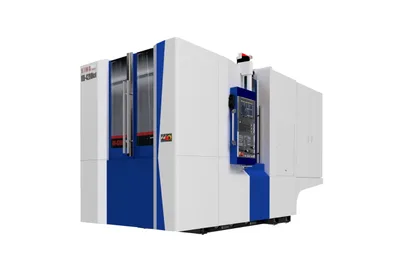
Tsugami FMA3-V
Key Specifications
X Travel
Y Travel
Z Travel
Max Spindle
Spindle Taper
Tool Capacity
How much does the Tsugami FMA3-V cost?
Estimated price range
Our best estimate for a horizontal machining centers (hmc) in this class — not a quote from Tsugami. Configuration moves it a long way.
Overview
The Tsugami FMA3-V is a 40-taper horizontal machining center on 300 × 300 mm (11.8 × 11.8 in) pallets, built around a 22/26/37 kW spindle that runs to 10,000 rpm (rated 8,000 rpm). Travels are 360 mm (14.2 in) in X, 330 mm (13.0 in) in Y and 400 mm (15.7 in) in Z, and the magazine holds 62 tools.
Power is the point of this version. The FMA3H-V on the same travels trades down to 18.5/26/30 kW for an 18,000 rpm (rated 14,000 rpm) spindle. The FMA3-V keeps the larger motor and a lower speed ceiling, which favours steel and cast iron, larger drills and taps, and face milling over high-speed aluminium work. The spindle is a 7/24 taper No.40 and takes BBT40 tooling.
Pallet capacity is the limit to plan around. Each pallet is rated for 80 kg (176 lb), and that has to cover the fixture, any tombstone and the parts. The B axis under the pallet is a positioning axis indexed in 1° steps, so the machine reaches four sides of a part by indexing between cuts; the table describes no simultaneous rotary machining.
Rapids are 24 m/min. The machine weighs 9,800 kg (21,605 lb) and measures 4,040 × 2,485 × 2,740 mm (159 × 97.8 × 108 in). The FMA3H-V with its 121-tool magazine weighs 12,200 kg (26,896 lb), so the FMA3-V is the lighter of the two current FMA3 builds.
Full Specifications
| Parameter | Value |
|---|---|
| Spindle Taper | 7/24 taper No.40 |
| Max Spindle Speed | 10,000 rpm (rated 8,000 rpm) |
| Spindle Motor Power | 22/26/37 kW |
| Pallet Size | 300 × 300 mm (11.8 × 11.8 in) |
| Max Pallet Load | 80 kg (176 lb) |
| Pallet Index | 1° (B axis, positioning) |
| X-Axis Travel | 360 mm (14.2 in) |
| Y-Axis Travel | 330 mm (13.0 in) |
| Z-Axis Travel | 400 mm (15.7 in) |
| Rapid Traverse Rate | 24 m/min |
| Tool Shank | BBT40 |
| Tool Capacity | 62 |
| Floor Space Required | 4,040 × 2,485 × 2,740 mm (159 × 97.8 × 108 in) |
| Machine Weight | 9,800 kg (21,605 lb) |
Specifications sourced from tsugami.co.jp — verified 2026-10-03
Strengths & Limitations
Strengths
- 22/26/37 kW spindle, against 18.5/26/30 kW on the FMA3H-V and 7.5 kW (10 hp) on the FMA3-III
- 62-tool magazine with BBT40 shanks on a 7/24 taper No.40 spindle
- B axis indexes in 1° steps, so four faces of a part can be reached on one pallet
- 9,800 kg (21,605 lb), lighter than the 12,200 kg (26,896 lb) FMA3H-V
Limitations
- Pallet load is 80 kg (176 lb), so heavy fixtures and tombstones eat into part weight
- 10,000 rpm maximum (rated 8,000 rpm), against 18,000 rpm on the FMA3H-V, limits small-tool aluminium work
- The B axis is listed for positioning (1°) only
- 360 mm (14.2 in) of X on 300 × 300 mm pallets limits part size; the FMA5-V offers 560 mm (22 in) of X
Best For
Frequently Asked Questions
01
It depends on material. The FMA3-V has a 22/26/37 kW spindle to 10,000 rpm (rated 8,000 rpm) and 62 tools. The FMA3H-V has 18.5/26/30 kW to 18,000 rpm (rated 14,000 rpm) and 121 tools. Travels, pallet size, the 80 kg (176 lb) pallet load and 24 m/min rapids are the same.
02
80 kg (176 lb) on a 300 × 300 mm (11.8 × 11.8 in) pallet. Weigh the fixture or tombstone together with the clamped parts before committing a job; on steel parts with a multi-face fixture the limit can be reached quickly.
03
The table lists the pallet index as 1° on the B axis, described as positioning. That lets the machine present each face of a part to the spindle in 1° steps between cuts. It does not describe simultaneous 4-axis contouring, so check with Tsugami if your parts need it.
04
The spindle is a 7/24 taper No.40 and the tool shank is BBT40. The magazine holds 62 tools, enough for several part numbers on one machine; the FMA3H-V holds 121 if the job mix needs more.
Videos

Tsugami America

Tsugami America
More from Tsugami



Other Horizontal Machining Centers (HMC)
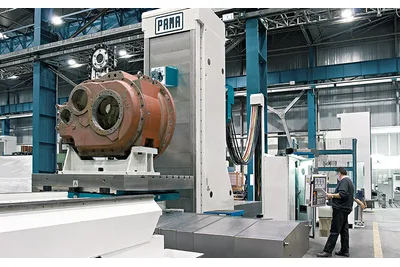
PAMA Speedmat
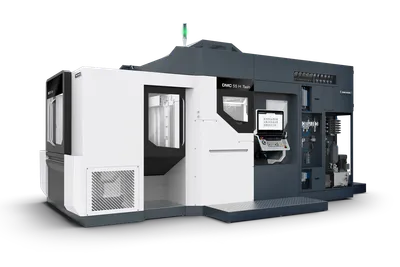
DMG Mori DMC 55 H twin