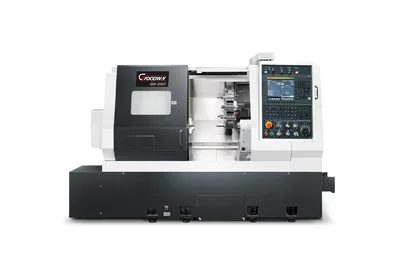
Okuma VTM-65
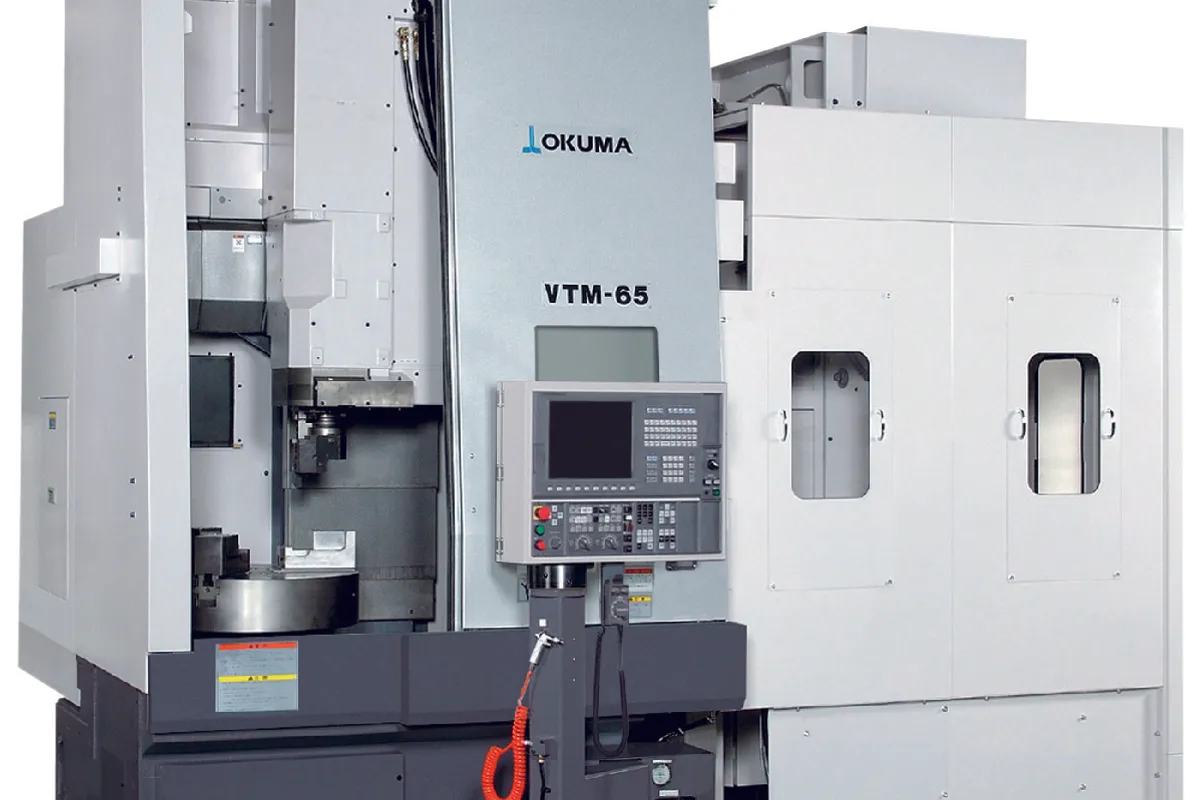
Image: d30jruhmdicmo0.cloudfront.net, Okuma
Key Specifications
X Travel
Z Travel
Rapid Traverse
Spindle Power
Max Turn Length
max turning diameter
How much does the Okuma VTM-65 cost?
Estimated price range
Our best estimate for a cnc lathes / turning center in this class — not a quote from Okuma. Configuration moves it a long way.
Overview
The Okuma VTM-65 sits at the small end of the VTM turn-mill line: a turning table for parts up to 650 mm (25.59 in) in diameter and 500 mm (19.7 in) tall, paired with a CAT 40 (BT 40) milling spindle. The table drive is listed at 30/22 kW (40/30 hp) and runs from 10 to 1,250 rpm. Travels are 500 mm (19.69 in) in X and 635 mm (25.0 in) in Z.
Weight sets the size of the job as much as diameter does. The table is rated for 500 kg (1,102 lb), and that has to cover the chuck or fixture as well as the part. A solid steel blank at the full diameter and height would weigh well over that, so the whole envelope is only usable for hollow or light-alloy work: housings, rings, wheels and thin-walled castings. For dense parts, work back from the load figure instead of the 650 mm diameter.
Milling is done by a spindle rated 22/15 kW (30/20 hp). That is machining-center power, not a small driven tool, so bolt circles, flats, ports and pockets can be finished in the same clamping as the turned diameters instead of going to a second machine. Tooling is ordinary 40-taper holders.
Moving up the range changes the envelope, not the motor. The VTM-80YB turns 800 mm (31.50 in) and the VTM-100 turns 1,000 mm (39.37 in), and both list the same 30/22 kW (40/30 hp) rating as this machine. A shop whose parts stay inside 650 mm therefore gets the same turning power from the VTM-65, with a table speed that reaches 1,250 rpm for the smaller diameters this size of work involves.
Full Specifications
| Parameter | Value |
|---|---|
| Max Turning Diameter | 650 mm (25.59 in) |
| Max Workpiece Height | 500 mm (19.7 in) |
| Table Power | 30/22 kW (40/30 hp) |
| Milling Spindle Power | 22/15 kW (30/20 hp) |
| Milling Spindle Taper | CAT 40 (BT 40) |
| Max Table Load | 500 kg (1,102 lb) |
| Rapid Traverse Rate | 30 m/min (X, Y, Z) |
| Rapid Traverse X | 18 m/min (59.06 fpm) |
| Rapid Traverse Z | 20 m/min (65.62 fpm) |
| Spindle Motor Power | 30/22 kW (40/30 hp) |
| Spindle Speed | 10–1,250 rpm |
| Max Turning Length | 635 mm (25.0 in) |
| X-Axis Travel | 500 mm (19.69 in) |
| Z-Axis Travel | 635 mm (25.0 in) |
Specifications sourced from okuma.com — verified 2026-10-03
Strengths & Limitations
Strengths
- Milling spindle rated 22/15 kW (30/20 hp) on a CAT 40 (BT 40) taper, so milled and drilled features are cut in the turning setup
- Table drive of 30/22 kW (40/30 hp), the same rating the VTM-80YB and VTM-100 list for larger diameters
- Table speed range of 10–1,250 rpm covers full-diameter facing and small bores alike
- 650 mm (25.59 in) turning diameter with 500 mm (19.69 in) of X and 635 mm (25.0 in) of Z travel
Limitations
- Table load is 500 kg (1,102 lb) including workholding, which rules out solid steel parts at the full diameter and height
- Workpiece height is limited to 500 mm (19.7 in) even though Z travel is 635 mm (25.0 in)
- Turning diameter stops at 650 mm (25.59 in); the VTM-80YB takes 800 mm (31.50 in) and the VTM-100 takes 1,000 mm (39.37 in)
Best For
Frequently Asked Questions
01
650 mm (25.59 in) in diameter and 500 mm (19.7 in) in height, with a table load of 500 kg (1,102 lb). The load figure includes the chuck or fixture, and for dense materials it will be reached before the dimensional limits are.
02
A CAT 40 (BT 40) spindle rated 22/15 kW (30/20 hp). Okuma's table does not give the milling spindle speed or the size of the tool magazine, so ask for both if the part has small drilled holes or needs many tools.
03
The table runs from 10 to 1,250 rpm on a 30/22 kW (40/30 hp) drive. The upper end of the range is useful on a machine of this size because many parts under 650 mm (25.59 in) have small bores and bosses that need high rpm to reach a proper cutting speed.
04
The VTM-65 turns 650 mm (25.59 in), the VTM-80YB 800 mm (31.50 in) and the VTM-100 1,000 mm (39.37 in). All three list 30/22 kW (40/30 hp). The VTM-80YB has far longer travels, 1,120 mm (44.09 in) in X and 1,135 mm (44.69 in) in Z, against 500 mm (19.69 in) and 635 mm (25.0 in) on the VTM-65.
Videos

High Technology Machines
More from Okuma
Other CNC Lathes / Turning Centers
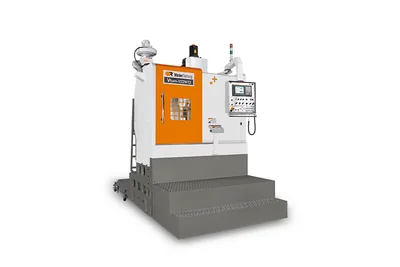
Victor Taichung Vturn-V22WT2
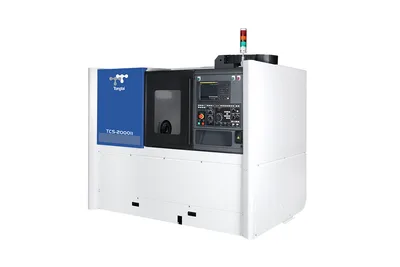
Tongtai TCS-2000II
Republic Lagun AT-1440-G-TW-CNC
INDEX C200