Industrial CNC Machine Directory

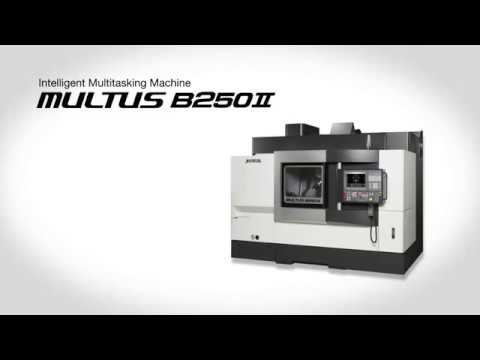
Okuma Multus B250II

$305,000 - $380,000 Updated 2026-03-10
01

Key Specifications

X Travel

500 mm (19.69 in)

Y Travel

200 mm (7.87 in)

Z Travel

800 mm (31.5 in)

Tool Capacity

20 tools (40 or 60 optional)

Max Turn Length

750 mm (29.53 in)

max turning diameter

600 mm (23.62 in)

02

Overview

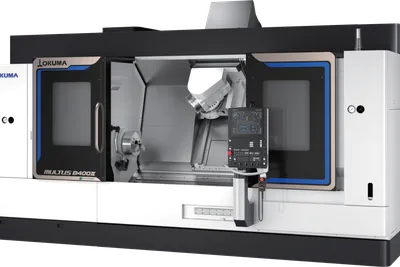
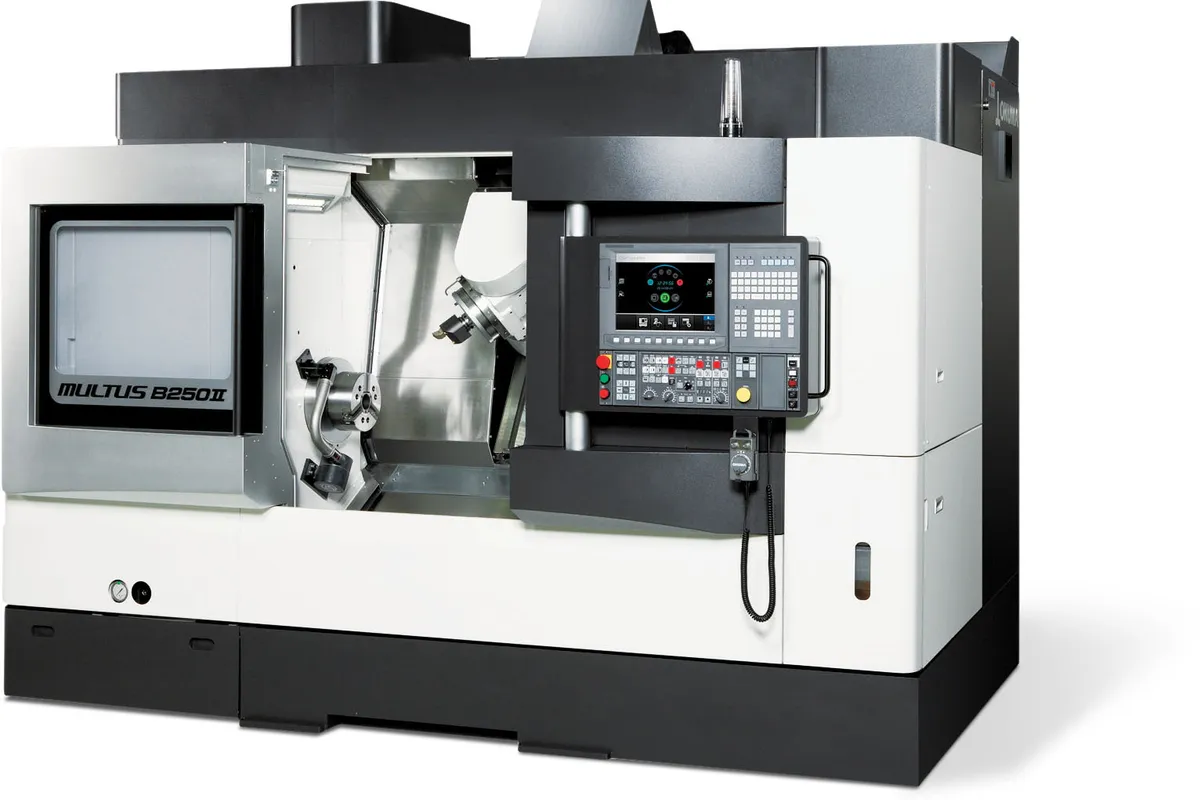
The Okuma Multus B250II is a mid-range multi-tasking machine that consolidates turning, milling, drilling, and 5-axis contouring into a single 8-inch chuck platform. It's built around Okuma's H1 dual-function spindle head, which swings through a 225-degree B-axis arc with 0.001-degree indexing and runs a 12,000 RPM milling spindle with Capto C6 tooling. That's a dedicated milling spindle capable of serious material removal, not a bolt-on live tool turret.

The main turning spindle delivers 22 kW (30 hp) at 5,000 RPM through an A2-6 nose with a 66 mm (2.6 in) bar capacity. An optional sub-spindle running at 6,000 RPM with 11 kW (15 hp) handles back-working operations, producing complete parts without a second op. Y-axis travel of 200 mm (7.87 in) is among the longest in this chuck class, giving you room for off-center milling and cross-drilling that smaller multi-taskers can't reach.

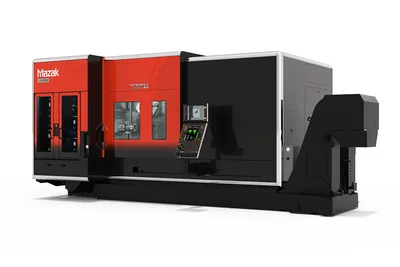
Axis travels measure 500 mm (19.69 in) on X, 800 mm (31.5 in) on Z, and 810 mm (31.89 in) on the W-axis for sub-spindle positioning. Rapid traverse runs at 40 m/min (1,575 ipm) on X and Z, with 26 m/min (1,023 ipm) on Y. The Mazak Integrex i-200 hits 50 m/min on X/Z, so the B250II isn't the fastest repositioner in the segment.

The standard 20-tool ATC is undersized for most real-world jobs, and some distributor configurations ship with 40 tools as standard. Budget for the 60-tool magazine from the start. Forum users consistently report running their 60-tool carousels completely full on complex parts. Okuma's OSP-P500 control includes the Collision Avoidance System (CAS), which simulates tool paths in 3D before cutting. The Thermo-Friendly Concept compensates for thermal drift during long cycles, which matters when you're holding tight tolerances across 4+ hours of continuous machining.

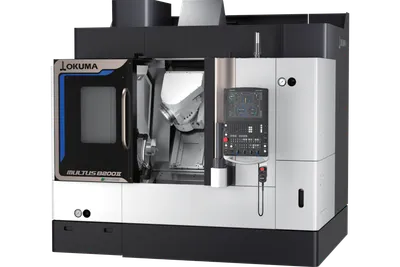
Direct competitors include the Mazak Integrex i-200 (larger work envelope, 240-degree B-axis), DMG Mori NLX 2500/700 (stronger turning focus), and the Doosan Puma SMX series (competitive pricing). The B250II slots between Okuma's smaller B200II and the larger B300II. The optional ARMROID built-in robot adds automated part loading, chip removal, and chatter suppression without consuming floor space for a separate robot cell. Floor space sits at just 7 m2, among the smallest in the class.

New pricing typically starts around $305,000 base, with fully equipped sub-spindle configurations reaching $380,000+. Used B250II machines from 2018-2022 trade in the $120,000-$220,000 range depending on hours and options. One independent shop review rated the machine 2.5 out of 5 stars, citing H1 head maintenance costs and programming complexity as pain points, though the reviewer acknowledged they'd consider a second unit given accumulated experience. Specs sourced from Okuma published data and distributor listings.

03

Full Specifications

Parameter Value
Max Turning Diameter 600 mm (23.62 in)
Max Turning Length 750 mm (29.53 in)
X-Axis Travel 500 mm (19.69 in)
Y-Axis Travel 200 mm (7.87 in)
Z-Axis Travel 800 mm (31.5 in)
Travel W 810 mm (31.89 in)
B Axis Range 225°
Main Spindle Speed 45 - 5,000 RPM
Main Spindle Power 22/15 kW (30/20 hp)
Main Spindle Torque 326/239 Nm (20 min/continuous)
Main Spindle Nose A2-6
Milling Spindle Speed 12,000 RPM (20,000 RPM optional)
Milling Spindle Power 12/8 kW (16/11 hp)
Milling Spindle Torque 40.1/26.3 Nm (5 min/continuous)
Milling Spindle Taper HSK-A63 / Capto C6
Sub Spindle Speed 6,000 RPM (optional)
Bar Capacity 66 mm (2.6 in)
Chuck Size 8 in (main) / 6 in (sub)
Tool Capacity 20 tools (40 or 60 optional)
Max Tool Length 200 mm (7.87 in)
Rapid Traverse Xz 40 m/min (1,575 ipm)
Rapid Traverse Y 26 m/min (1,023 ipm)
C Axis Speed 200 min-1
B Axis Speed 30 min-1
Floor Space 3,620 x 2,210 mm (142.5 x 87 in)
Machine Height 2,582 mm (101.7 in)
CNC Control Okuma OSP-P500
Okuma Global Repair Center Charlotte, North Carolina

Specifications sourced from okuma.com — verified 2026-03-28

04

Strengths & Limitations

Strengths

  • H1 dual-function spindle head with 12,000 RPM Capto C6 milling capability delivers true machining center performance, not just live tooling
  • 225-degree B-axis with 0.001-degree indexing accuracy enables complex angular features and full 5-axis contouring in a single setup
  • OSP-P500 control with Collision Avoidance System (CAS) runs full 3D simulation before cutting, preventing costly crashes on complex multi-tasking programs
  • Thermo-Friendly Concept compensates for thermal drift during long-cycle jobs, maintaining tolerances where competitors require manual offset adjustments
  • 200 mm (7.87 in) Y-axis travel is among the longest in the 8-inch chuck class, providing reach for off-center features that smaller machines can't handle
  • Optional ARMROID built-in robot handles part loading, chip removal, and chatter suppression without consuming external floor space for automation
  • Forum users report 35,000-45,000 green-light hours and approaching 1 million ATC cycles on 5-7 year old machines, confirming long-term durability under heavy production use

Limitations

  • Standard 20-tool magazine is inadequate for most production work; budget for the 40 or 60-tool upgrade from day one
  • H1 milling head repairs are expensive and time-consuming; one shop reported multiple service visits after a minor collision, with hydraulic and coolant leak issues following the repair
  • 40 m/min rapids on X/Z trail the Mazak Integrex i-200's 50 m/min, adding up on high-volume jobs with frequent repositioning
  • Programming complexity is steep; the CAS collision avoidance system has a significant learning curve and requires careful 3D model setup to function correctly, with Mastercam post configuration requiring significant effort
  • 8-10 second tool change time is slower than some competitors and adds cycle time on parts requiring frequent tool swaps
05

Best For

Aerospace shops producing complex flight components that need turning, milling, and drilling completed in a single setup Job shops running high-mix, low-volume work where eliminating multiple setups across different machines cuts lead time dramatically Medical device manufacturers machining implants and instruments with tight tolerances across multiple feature types Shops looking to run lights-out production with bar feeders, using the optional sub-spindle for complete part-in/part-out cycles Oil and gas component production requiring complex OD/ID profiles plus cross-holes, flats, and angular features Manufacturers seeking built-in automation through ARMROID without the cost and floor space of a standalone robot cell
06

Frequently Asked Questions

01 What does a new Okuma Multus B250II cost?

Base price starts around $305,000 for a single-spindle configuration with 40-tool ATC. Most production setups with the sub-spindle, 60-tool magazine, high-pressure coolant, and ARMROID automation run $350,000-$380,000. Used B250II machines from 2018-2022 trade for $120,000-$220,000 depending on hours, spindle condition, and installed options.

02 How does the B250II compare to the Mazak Integrex i-200?

The Integrex i-200 has a slightly larger work envelope (658 mm turning diameter vs 600 mm), a wider 240-degree B-axis range, and faster 50 m/min rapids. The B250II counters with Okuma's Collision Avoidance System, Thermo-Friendly Concept, and the ARMROID automation option. Both run Capto C6 milling spindles at 12,000 RPM. Pricing is comparable. The choice often comes down to control preference (Okuma OSP vs Mazak MAZATROL) and dealer support in your area.

03 Is the H1 milling head reliable?

The H1 head is capable but can be expensive to repair. One shop reported that a small collision required multiple Okuma service visits and led to hydraulic and coolant leaks after repair. An independent reviewer rated the machine 2.5/5 overall, citing H1 head maintenance as the number one issue. Prevention is key: use the CAS system, invest time in proper 3D model setup, and train operators thoroughly.

04 What maintenance does the B250II require?

Standard maintenance includes spindle oil and hydraulic fluid changes, way lube system checks, coolant system upkeep, and ATC mechanism lubrication. The H1 head bearings and Capto interface should be inspected annually. Okuma's OSP control monitors machine health and flags maintenance intervals. Budget $5,000-$12,000/year for service and consumables, more if you're running high hours.

05 Should I get the 20, 40, or 60-tool magazine?

Get the 60-tool magazine. Forum users running production work consistently report that even 60 tools aren't enough for complex jobs. The 20-tool standard is only suitable for simple, low-mix work, and some distributors already ship with 40 as standard. The price difference is modest relative to the total machine cost, and you can't easily upgrade later.

06 Can the B250II run lights-out?

Yes. With the sub-spindle option, a bar feeder (4-foot systems are common), and Hardinge FlexC collets, shops run the B250II unattended through overnight shifts. The ARMROID option adds in-machine part loading/unloading and chip management. Tool monitoring with breakage detection is available, and the 60-tool magazine provides room for backup tools to keep the machine cutting if an insert wears out.

07

Videos

Okuma Multus B250II Mastercam Demo!

Okuma Multus B250II Mastercam Demo!

EMEC Machine Tools Inc

Okuma MULTUS B250II【OKUMA CORPORATION JAPAN】

Okuma MULTUS B250II【OKUMA CORPORATION JAPAN】

OKUMA CORPORATION JAPAN

Okuma MULTUS B250II - Kremin CNC Machine Reviews

Okuma MULTUS B250II - Kremin CNC Machine Reviews

Kremin Inc. Manufacturing

MULTUS B250II Demonstration

MULTUS B250II Demonstration

Okuma America Corporation

MULTUS B250II ARMROID_EMO2021【OKUMA CORPORATION JAPAN】

MULTUS B250II ARMROID_EMO2021【OKUMA CORPORATION JAPAN】

OKUMA CORPORATION JAPAN

08

Community Discussions

09

Comparisons

10

Related Machines