Industrial CNC Machine Directory

Okuma LU-S1600

$180,000 - $280,000 Updated 2026-03-13
01

Key Specifications

Max Spindle

min⁻¹

Rapid Traverse

30 m/min X, 36 m/min Z

Max Turn Length

180 mm (7.1 in)

max turning diameter

Ø160

swing over bed

340 mm (13.4 in)

main spindle speed

6,000 RPM

02

Overview

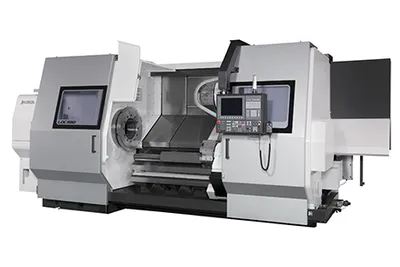
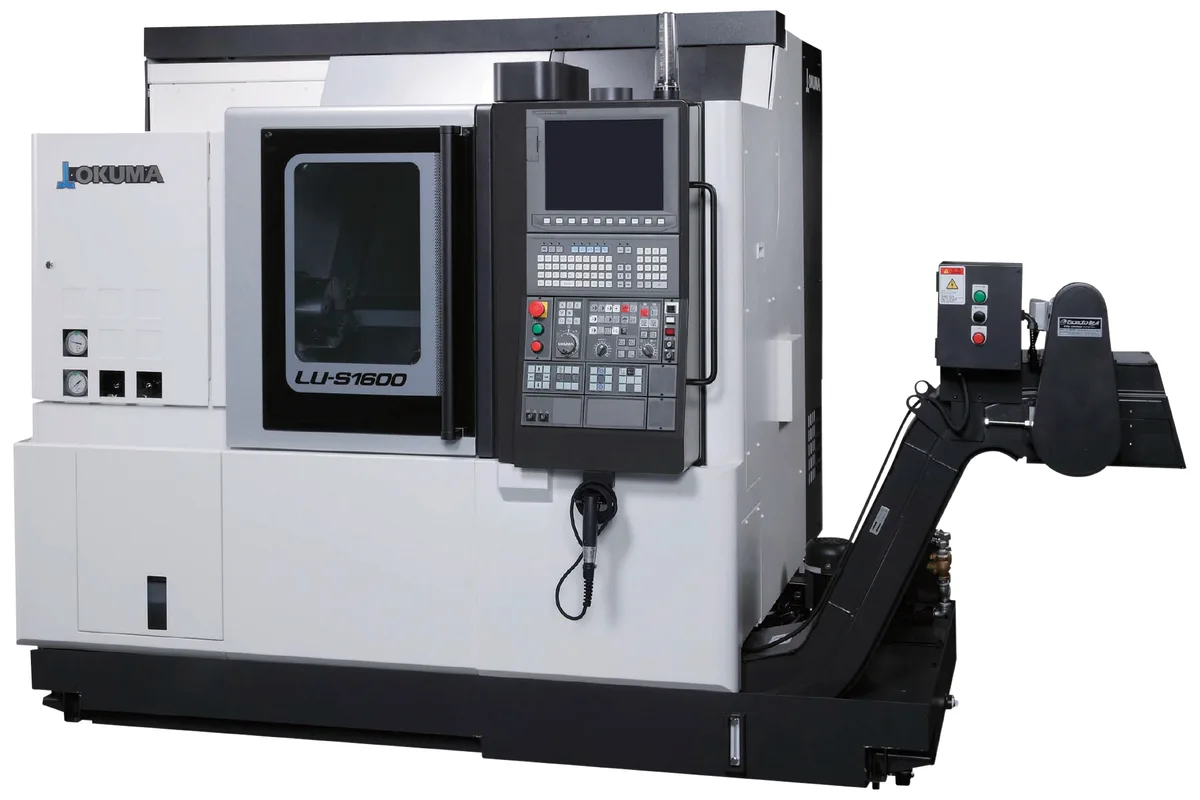
The Okuma LU-S1600 is a compact twin-turret horizontal turning center designed for high-speed, high-precision production of small parts. The 'S' designation identifies it as a small-footprint, high-speed platform in Okuma's LU twin-turret family, purpose-built for shops running small-diameter bar stock at production volumes where cycle time is everything.

Max turning diameter is 200 mm (7.9 in) with a swing over bed of 340 mm (13.4 in). The main spindle delivers 11/7.5 kW (15/10 hp) at up to 6,000 RPM through a JIS A2-5 spindle nose. The sub-spindle provides 7.5/5.5 kW (10/7.5 hp) at up to 6,000 RPM for back-side machining. Both spindles use 6-inch chucks. Bar capacity is 42 mm (1.65 in), targeting the small-diameter bar stock common in medical, dental, electronics, and precision instrument manufacturing.

The upper turret carries 12 stations with BMT mounting for driven tools at up to 6,000 RPM. The lower turret adds 8 stations for simultaneous OD operations. With 20 total tool stations and twin-turret simultaneous cutting, the LU-S1600 achieves cycle times that single-turret machines cannot match on parts requiring multiple tools.

Rapid traverse rates hit 30 m/min on X and 36 m/min on Z—significantly faster than larger LU series machines. At approximately 4,200 kg (9,259 lb), the machine has a compact footprint that fits into tight production cells. Okuma's OSP-P300L control manages twin-turret synchronization with Collision Avoidance System.

The LU-S1600 competes with the Citizen Miyano BNJ-42S, Nakamura-Tome WY-100, Star SR-38, and Tsugami B0385-II in the compact twin-turret/twin-spindle segment. It offers the Okuma OSP control ecosystem and Thermo-Friendly Concept to shops that prefer the Okuma platform over Swiss-type or Citizen/Nakamura controls. Specs sourced from Okuma published data.

03

Full Specifications

Parameter Value
Max Turning Diameter Ø160
Max Turning Length 180 mm (7.1 in)
Swing Over Bed 340 mm (13.4 in)
Main Spindle Speed 6,000 RPM
Main Spindle Power 11/7.5 kW (15/10 hp)
Sub Spindle Speed 6,000 RPM
Sub Spindle Power 7.5/5.5 kW (10/7.5 hp)
Spindle Nose JIS A2-5
Chuck Size 6 in (165 mm)
Bar Capacity 42 mm (1.65 in)
Upper Turret Stations 12 (BMT mounting)
Lower Turret Stations 8
Driven Tool Speed 6,000 RPM
Rapid Traverse Rate 30 m/min X, 36 m/min Z
Machine Weight 4,200 kg (9,259 lb)
CNC Control Okuma OSP-P300L
Max Spindle Speed min⁻¹
Standard Power 11/7.5
Rapid Traverse X Z 20 / 30
Okuma Global Repair Center Charlotte, North Carolina
Inches Metric
Spindle Nose Type JIS A2-6 [Ø140 flat]
Spindle Speed 40~4,000

Specifications sourced from okuma.com — verified 2026-03-28

04

Strengths & Limitations

Strengths

  • 6,000 RPM on both spindles enables high-speed finishing on small-diameter aluminum, brass, and steel parts
  • Twin turrets with 20 total tool stations provide simultaneous cutting for minimum cycle times
  • Twin spindles enable complete front and back machining without manual part handling
  • Fast rapids (30/36 m/min) minimize non-cutting time for maximum spindle utilization
  • Compact footprint fits into production cells alongside bar feeders and part handling systems
  • BMT driven tools at 6,000 RPM provide full mill-turn capability on both turrets

Limitations

  • 42 mm bar capacity limits work to small-diameter stock; larger parts need the LT2000 EX or LU3000 EX
  • 200 mm max turning diameter restricts chucking work to small components
  • Starting at $180K, the twin-turret/twin-spindle investment is high for a compact machine
  • Programming complexity is significant; operators need twin-turret/twin-spindle training
  • OSP control is less common in the small-parts production segment dominated by Fanuc and Mitsubishi controls
05

Best For

Medical device manufacturers producing small precision components from stainless and titanium bar stock Dental implant and surgical instrument production requiring complete front-and-back machining in one cycle Electronics connector and fitting manufacturers running high-speed brass and aluminum production Automotive sensor housing and small component production at high volumes Precision instrument manufacturers needing Okuma-grade thermal stability on small-parts production
06

Frequently Asked Questions

01 What does an Okuma LU-S1600 cost?

New LU-S1600 machines run $180,000-$280,000 depending on configuration. Base twin-turret/twin-spindle setups start around $180,000-$210,000. Full configurations with driven tools on both turrets and maximum options reach $250,000-$280,000. Used machines from 2016-2021 sell for $100,000-$160,000.

02 How does the LU-S1600 compare to a Swiss-type lathe?

Swiss-type lathes (Star, Citizen, Tsugami) use a guide bushing for superior support on long, slender parts. The LU-S1600 is a fixed-headstock machine without a guide bushing, which means it can't match Swiss-type slenderness ratios. However, the LU-S1600 offers more rigid chucking, larger turning diameter, and simpler setup for parts that don't need guide bushing support. Choose Swiss-type for L/D ratios over 4:1; choose the LU-S1600 for compact parts with complex features.

03 Can the LU-S1600 run lights-out?

Yes. With a bar feeder, parts catcher, and chip conveyor, the LU-S1600 runs unattended for the duration of the bar stock supply. The twin-spindle architecture completes parts in one cycle, eliminating manual intervention between operations. The Collision Avoidance System provides crash protection during unmanned operation.

04 What bar feeder works with the LU-S1600?

The 42 mm bar capacity works with compact bar feeders from LNS (Quick Load Servo 65), Iemca (BOSS 338), and Edge Technologies (FMB Turbo 3-42). The compact machine footprint pairs well with short magazine bar feeders for space-efficient production cells.

05 How does the LU-S1600 compare to the Okuma LT2000 EX?

The LT2000 EX has a larger turning diameter (250 vs 200 mm), more spindle power (20/15 vs 15/10 hp), and larger bar capacity (54 vs 42 mm). The LU-S1600 has faster spindle speeds (6,000 vs 5,000 RPM) and faster rapids (30/36 vs 25/30 m/min). Choose the LU-S1600 for high-speed small parts; the LT2000 EX for larger parts needing more power.

07

Videos

2-Saddle CNC Lathe LU-S1600 【OKUMA CORPORATION JAPAN】

2-Saddle CNC Lathe LU-S1600 【OKUMA CORPORATION JAPAN】

OKUMA CORPORATION JAPAN

OKUMA LU-S1600 - CNC Lathe

OKUMA LU-S1600 - CNC Lathe

KRAFFTER Machine Tools

Lathe LU S1600

Lathe LU S1600

Okuma Europe GmbH

2-Saddle CNC Lathe LU-S1600 with Gantry Loader【OKUMA CORPORATION JAPAN】

2-Saddle CNC Lathe LU-S1600 with Gantry Loader【OKUMA CORPORATION JAPAN】

OKUMA CORPORATION JAPAN

OKUMA 2-Spindle CNC Lathe LU-S1600 2SCx500 (2017) For Sale

OKUMA 2-Spindle CNC Lathe LU-S1600 2SCx500 (2017) For Sale

JS PRECISION CO

08

Community Discussions

09

Related Machines