Industrial CNC Machine Directory

Okuma LT3000 EX

$250,000 - $380,000 Updated 2026-03-13
01

Key Specifications

Rapid Traverse

25 m/min X, 30 m/min Z

Max Turn Length

300 mm (11.8 in)

max turning diameter

Ø350

swing over bed

560 mm (22 in)

main spindle speed

4,500 RPM

main spindle power

22/15 kW (30/20 hp)

02

Overview

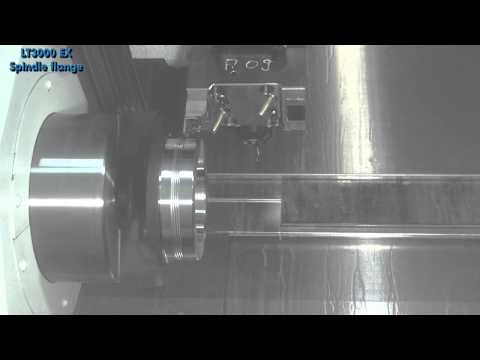
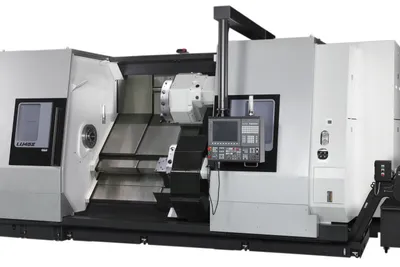
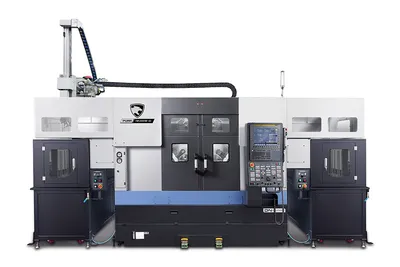
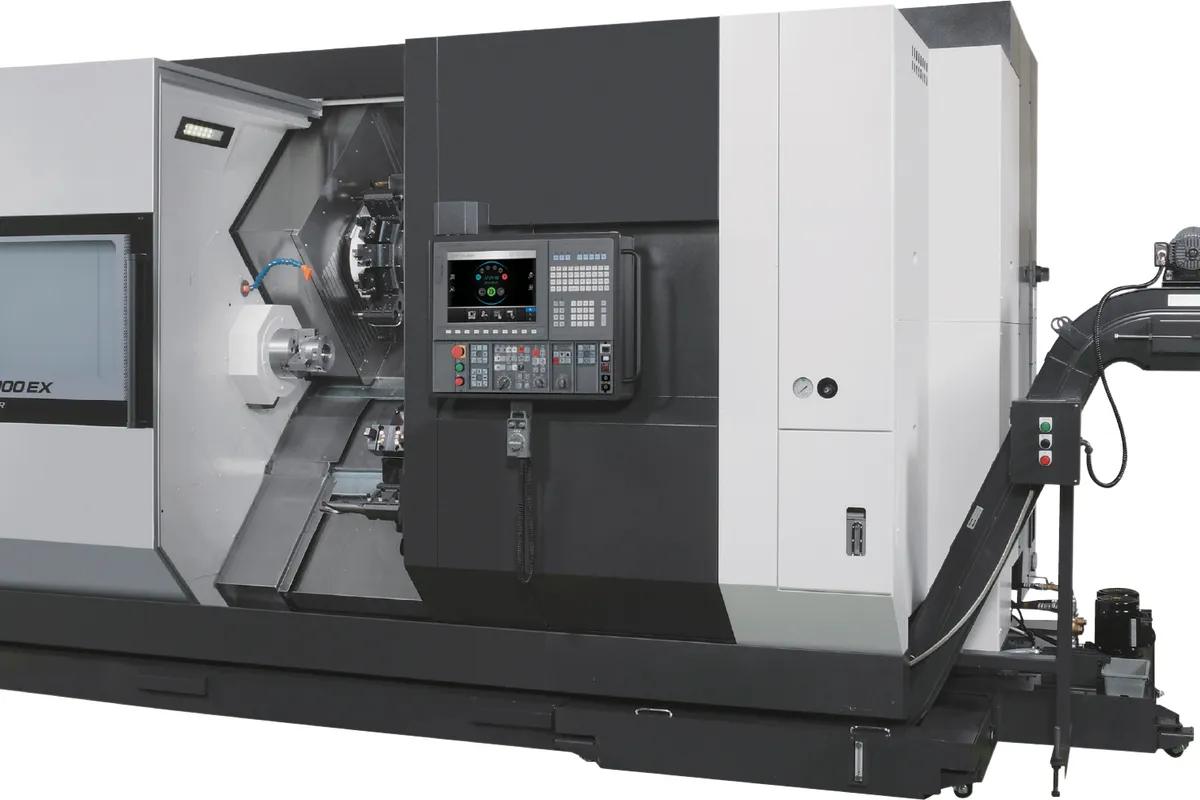
The Okuma LT3000 EX is a twin-spindle, twin-turret horizontal turning center that scales up the LT2000 EX concept to handle larger workpieces. With a maximum turning diameter of 340 mm (13.4 in) and the same dual-turret productivity architecture, the LT3000 EX targets production shops that need simultaneous machining capability on mid-size turned parts requiring front and back operations.

The main spindle delivers 22/15 kW (30/20 hp) at up to 4,500 RPM through an A2-8 spindle nose, while the sub-spindle provides 15/11 kW (20/15 hp) at up to 4,500 RPM. Both use 10-inch hydraulic chucks. Bar capacity is 65 mm (2.56 in), matching the single-turret LB2500 EX II. Standard turning length is 300 mm (11.8 in), with longer options available.

Each turret carries 12 stations with BMT mounting and driven tool capability at up to 6,000 RPM. Y-axis is available on both turrets for off-center milling operations. With 24 total tool stations, most parts can be completed without tool station conflicts, enabling true simultaneous cutting with both turrets engaged.

Okuma's OSP-P300L control handles the complex synchronization between two turrets and two spindles. The Collision Avoidance System is particularly valuable here, as the two turrets operate in close proximity within the cutting zone. Thermo-Friendly Concept maintains accuracy across both spindle assemblies during extended production runs.

The LT3000 EX sits in a competitive space against the Mazak INTEGREX j-200S, DMG Mori NLX 2500/1250 with sub-spindle, and Nakamura-Tome WT-150II. The twin-turret architecture provides a significant productivity advantage over single-turret machines with sub-spindle, though at a higher purchase price. Shops running 3-shift production on parts with 6+ tools and back-side features see the fastest ROI. Specs sourced from Okuma published data.

03

Full Specifications

Parameter Value
Max Turning Diameter Ø350
Max Turning Length 300 mm (11.8 in)
Swing Over Bed 560 mm (22 in)
Main Spindle Speed 4,500 RPM
Main Spindle Power 22/15 kW (30/20 hp)
Sub Spindle Speed 4,500 RPM
Sub Spindle Power 15/11 kW (20/15 hp)
Spindle Nose A2-8
Chuck Size 10 in (254 mm)
Bar Capacity 65 mm (2.56 in)
Turret Stations 12 per turret (2 turrets, 24 total)
Driven Tool Speed 6,000 RPM (BMT)
Rapid Traverse Rate 25 m/min X, 30 m/min Z
Machine Weight 7,800 kg (17,196 lb)
CNC Control Okuma OSP-P300L
Speed Range 45~5,000 [45~4200]
Standard Power 22/15 [30/22]
Okuma Global Repair Center Charlotte, North Carolina
Inches Metric
Spindle Nose Type A2-6 [A2-8]

Specifications sourced from okuma.com — verified 2026-03-28

04

Strengths & Limitations

Strengths

  • Twin turrets with simultaneous cutting reduce cycle times 30-50% over single-turret lathes on complex parts
  • 22 kW main spindle and 15 kW sub-spindle provide enough power for aggressive roughing on both sides
  • 24 total tool stations eliminate most tool change requirements during complex part cycles
  • 340 mm turning diameter handles mid-size parts that the smaller LT2000 EX can't accommodate
  • BMT driven tools at 6,000 RPM on both turrets enable comprehensive mill-turn capability
  • Collision Avoidance System prevents expensive crashes in the tight dual-turret cutting zone

Limitations

  • Starting at $250K, the twin-turret investment requires high production volumes to justify over a single-turret LB3000 EX III
  • Programming complexity is significantly higher than single-turret machines; experienced twin-turret programmers are scarce
  • 300 mm standard turning length limits shaft work; longer bed options add cost
  • 7,800 kg weight and footprint require more floor space than a comparable single-turret lathe
  • OSP twin-turret programming environment requires specialized training beyond standard OSP skills
05

Best For

High-volume automotive production running complex turned parts with front and back features in 3-shift operations Hydraulic fitting and valve body manufacturers producing done-in-one parts from 65 mm bar stock Aerospace component shops needing complete part processing with documented process traceability Contract manufacturers competing on cycle time for mid-size turned-and-milled production parts Shops upgrading from LT2000 EX that need more turning diameter and spindle power
06

Frequently Asked Questions

01 What does an Okuma LT3000 EX cost?

New LT3000 EX machines run $250,000-$380,000 depending on configuration. Base twin-turret/twin-spindle setups start around $250,000-$290,000. Full configurations with Y-axis on both turrets and complete driven tool capability reach $340,000-$380,000. Used machines from 2015-2020 sell for $130,000-$200,000.

02 How does the LT3000 EX compare to a single-turret LB3000 EX III with sub-spindle?

The LT3000 EX has two turrets (24 stations) versus one turret (12 stations) on the LB3000 EX III MYW. Both have twin spindles for front/back machining. The LT3000 EX can cut with both turrets simultaneously, reducing cycle time by 30-50% on parts with many tools. The LB3000 EX III costs roughly 40% less and is simpler to program. Choose the LT for maximum productivity; the LB for simpler operations and lower investment.

03 What's the ROI timeline on an LT3000 EX?

Shops running 3 shifts on parts with 6+ tools and back-side features typically see ROI in 12-18 months compared to running the same parts on two single-turret machines. The calculation depends on part complexity, batch sizes, and labor costs. Simple parts with few tools may never justify the twin-turret premium.

04 Can I run the LT3000 EX as a single-turret machine?

Yes. The OSP control supports single-turret mode where only one turret operates while the other parks out of the way. This is useful for simple jobs or during operator training. However, buying an LT3000 EX to run single-turret most of the time doesn't make economic sense; buy an LB3000 EX III instead.

05 What CAM software supports the LT3000 EX?

Mastercam, Esprit, GibbsCAM, and CATIA all offer twin-turret/twin-spindle post processors for the Okuma LT series. Esprit is particularly strong for multi-turret synchronization programming. Okuma's One Touch IGF conversational programming can handle simpler twin-turret jobs directly at the control.

07

Videos

Lathe LT3000 EX 2T2MY

Lathe LT3000 EX 2T2MY

Okuma Europe GmbH

OKUMA 2 Spindle 2 Turret Lathe  LT3000 EX

OKUMA 2 Spindle 2 Turret Lathe LT3000 EX

BULMAKMETAL

Okuma’s LU3000 EX - Twin Turret Lathe

Okuma’s LU3000 EX - Twin Turret Lathe

Okuma America Corporation

LT 2000EX with 3 Turrets and Okuma Gantry Loader

LT 2000EX with 3 Turrets and Okuma Gantry Loader

Okuma America Corporation

2016 OKuma LT-3000EX-2TMY, Twin Spindle, Twin Turret, Live Tooling, Big Bore CNC Lathe

2016 OKuma LT-3000EX-2TMY, Twin Spindle, Twin Turret, Live Tooling, Big Bore CNC Lathe

actionmachinery

08

Community Discussions

09

Related Machines