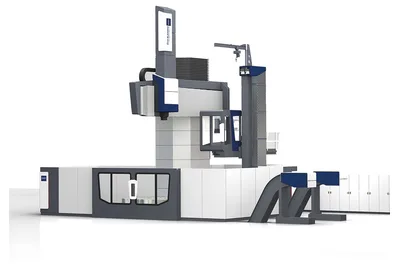
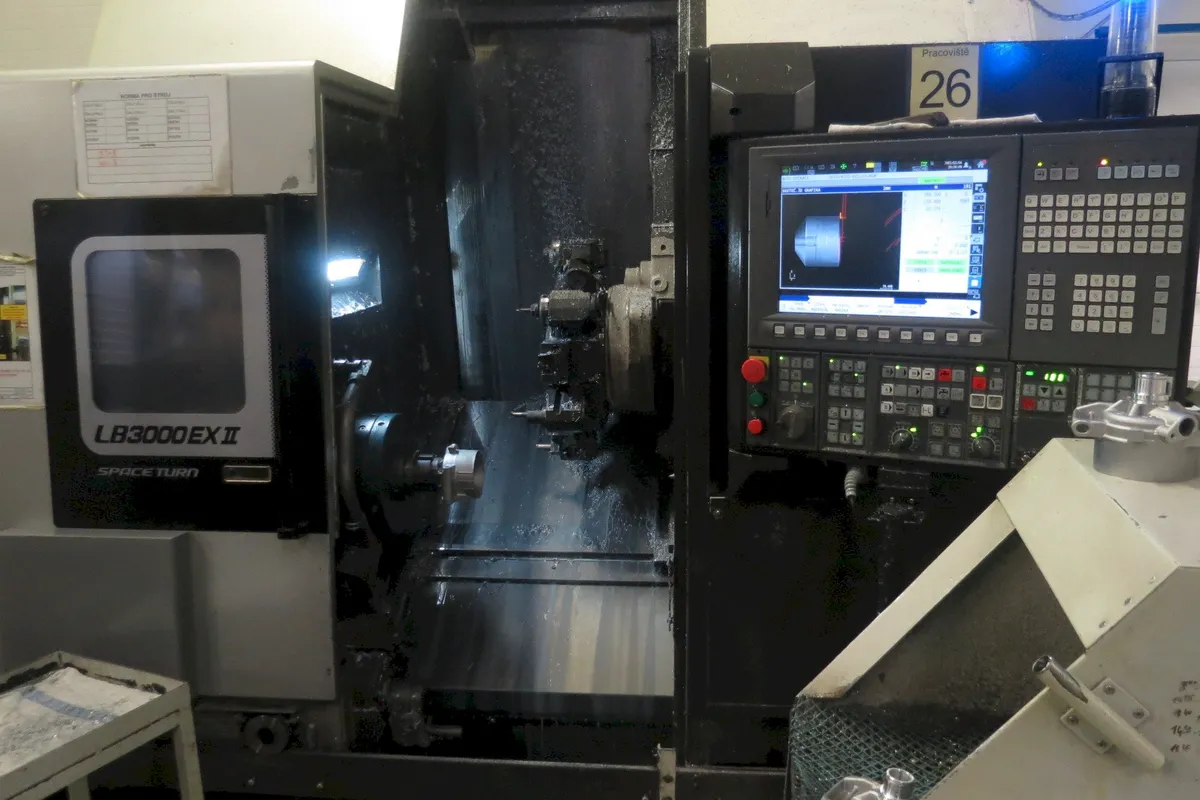
Okuma LB3000 EX II
Key Specifications
Max Spindle
Spindle Taper
Tool Capacity
Weight
Rapid Traverse
Spindle Power
How much does the Okuma LB3000 EX II cost?
Estimated price range
Our best estimate for a cnc lathes / turning center in this class — not a quote from Okuma. Configuration moves it a long way.
Overview
The listed figures for the Okuma LB3000 EX II describe a 254 mm (10 in) chuck turning center sold as a set of configurations more than as one fixed machine. The spindle is 22 kW (30 hp) and comes in two bores: the standard bore runs to 5,000 RPM and the big bore to 4,200 RPM. Bar capacity is listed as 76 mm (3 in).
Bed length is the second choice. Maximum machining length is listed as 500, with 1,000 and 1,300 in brackets as options and no unit on the row. Turning diameter appears twice, as 410 and as 413 mm (16.3 in), and the spindle nose appears as JIS A2-6 on one row and A2-8 on another. With two bores on offer, check which nose and which diameter apply to the machine in front of you.
The turret has 12 stations. Live tooling and a sub-spindle are both listed as optional, so a given machine may be turning-only or may also mill. Where live tooling is fitted, the listed speed is 6,000 RPM with the BMT turret, and the Y-axis travel of ±55 mm (2.17 in) applies to MY/MYW models only.
Thermo-Friendly Concept and the anti-crash system are listed as standard, and the control is the Okuma OSP-P300L. The table also gives positioning accuracy of ±0.004 mm, repeatability of ±0.002 mm, rapids of 25 m/min in X and 30 m/min in Z, and a weight of 4,800 kg (10,582 lb). Because options change so much on this model, read the build sheet of the actual machine before relying on any optional figure.
Full Specifications
| Parameter | Value |
|---|---|
| Max Spindle Speed | 5,000 RPM (standard bore); 4,200 RPM (big bore) |
| Spindle Motor Power | 22 kW (30 hp) |
| Spindle Taper | A2-8 |
| Chuck Size | 254 mm (10 in) |
| Bar Capacity | 76 mm (3 in) |
| Tool Capacity | 12-station turret |
| Y Axis Travel | ±55 mm (2.17 in) (MY/MYW models) |
| Live Tooling Speed | 6,000 RPM (BMT turret) |
| Rapid Traverse Rate | 25 m/min X, 30 m/min Z |
| Positioning Accuracy | ±0.004 mm |
| Repeatability | ±0.002 mm |
| Machine Weight | 4,800 kg (10,582 lb) |
| CNC Control | Okuma OSP-P300L |
| Speed Range | 45~5,000 |
| Rapid Traverse X Z | 25/30 |
| Standard Power | 22/15 |
| Max Machining Diameter | 410 |
| Max Machining Length | 500 [1,000; 1,300] |
| Spindle Nose Type | JIS A2-6 |
| Max Turning Diameter | 413 mm (16.3 in) |
| Turret Stations | 12-position |
| Live Tooling | Optional |
| Thermo Friendly Concept | Standard |
| Anti Crash System | Standard |
| Sub Spindle | Optional |
Specifications compiled from manufacturer literature and industry references. Not independently verified against a published spec sheet — confirm with the manufacturer or an authorised dealer before making a purchasing decision.
Strengths & Limitations
Strengths
- 22 kW (30 hp) spindle with a choice of standard bore at 5,000 RPM or big bore at 4,200 RPM
- Three machining lengths are listed: 500, with 1,000 and 1,300 as options
- Thermo-Friendly Concept and the anti-crash system are listed as standard
- Listed positioning accuracy of ±0.004 mm and repeatability of ±0.002 mm
- 76 mm (3 in) bar capacity with a 254 mm (10 in) chuck
Limitations
- Live tooling and the sub-spindle are optional, so a given machine may have neither
- Y-axis travel of ±55 mm (2.17 in) applies to MY/MYW models only
- The big bore spindle is limited to 4,200 RPM
- The listed rows give two spindle nose sizes and two turning diameters, which need confirming on the machine
Best For
Frequently Asked Questions
01
Speed, according to the listed figures: the standard bore spindle runs to 5,000 RPM and the big bore to 4,200 RPM. Spindle power is listed as 22 kW (30 hp) and bar capacity as 76 mm (3 in), without saying which bore that capacity belongs to.
02
Live tooling is listed as optional, with a speed of 6,000 RPM on the BMT turret. Y-axis travel of ±55 mm (2.17 in) is listed for MY/MYW models only. A sub-spindle is also optional, so check what the individual machine was built with.
03
The table lists a maximum machining length of 500, with 1,000 and 1,300 shown in brackets as options. The row carries no unit. The 12-station turret and the 22 kW (30 hp) spindle are listed without reference to length.
04
The listed positioning accuracy is ±0.004 mm and the listed repeatability is ±0.002 mm. Thermo-Friendly Concept is listed as standard. For a used machine, treat these as as-built figures and ask for a recent inspection report.
05
In the listed figures, the LB3000 EX III runs the OSP-P500 control and weighs 5,000 kg (11,023 lb), against the Okuma OSP-P300L and 4,800 kg (10,582 lb) for the LB3000 EX II. Both are listed with 22 kW (30 hp) and rapids of 25 m/min in X and 30 m/min in Z.
Videos

Okuma America Corporation

Okuma America Corporation

Okuma America Corporation

Okuma America Corporation
Community Discussions
Options and configuration advice
Owner experience and review
Troubleshooting and problem-solving
Options and configuration advice
Comparison and buying advice
Links to community discussions. Summaries are editorial — visit the original thread for full context.
More from Okuma
Other CNC Lathes / Turning Centers
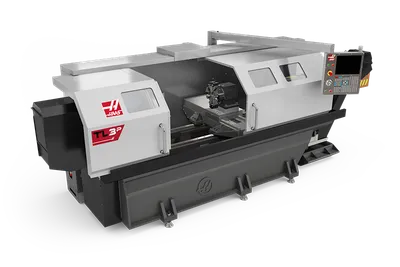
Haas TL-3P
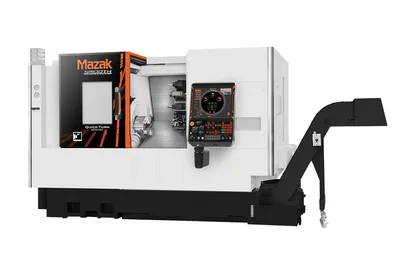
Mazak QUICK TURN 350MSY
ROMI VTL 700MR
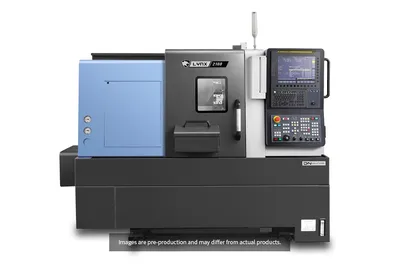
DN Solutions LYNX 2100 LC
Johnford VTC-3000ATC