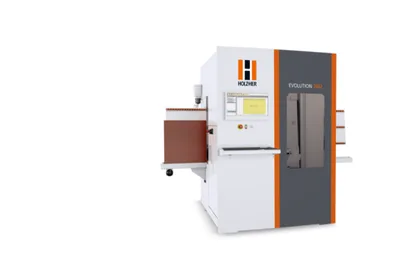
Masterwood Project 400
This model was not found in Masterwood's current lineup when we checked on 2026-10-03 . It may be a superseded or older model; the specifications below are as we last recorded them.
Key Specifications
Spindle Power
x travel
y travel
z travel
table type
spindle speed
How much does the Masterwood Project 400 cost?
Estimated price range
Our best estimate for a cnc router in this class — not a quote from Masterwood. Configuration moves it a long way.
Overview
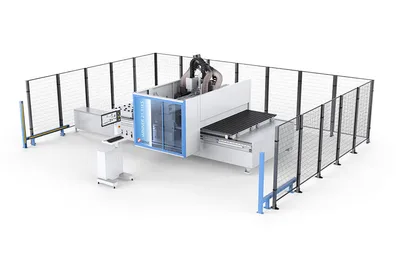
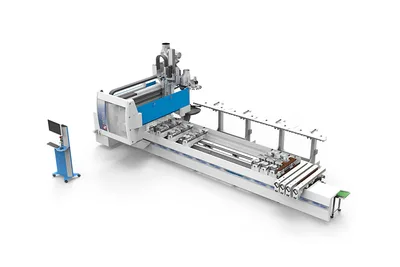
The Masterwood Project 400 is a pod-and-rail CNC router with 4,200 mm (165 in) of X travel, 1,300 mm (51 in) of Y and 300 mm (11.8 in) of Z. Masterwood's current lineup does not include it, and the listed figures have not been checked against a maker page. Treat them as a reference when inspecting a machine and confirm each one against its nameplate and documents.
The table is the point-to-point type with vacuum clamping on pods and rails. That lifts the workpiece clear of the table so its edges can be machined all round, at the cost of setting pod positions for each part family. A long X axis against 1,300 mm (51 in) of Y fits long, narrow workpieces better than wide sheets.
The spindle is listed at 9.0-13.0 kW (12-17.5 HP) with a speed range of 1,000-24,000 RPM, served by a 16 position tool changer that is optional up to 24. An integrated row boring unit is listed, so hole patterns do not have to be drilled one at a time by the main spindle. The aggregate head is optional, and it is the only row that mentions 5-axis capability; a machine without that head should not be assumed to have it.
The control is listed as Masterwood Maestro or PC-based control, so check which one a particular machine carries. Weight is 4,200 kg (9,259 lb) and the supply is 400 VAC 3-phase 50 Hz, which needs attention wherever the mains is not 50 Hz.
Full Specifications
| Parameter | Value |
|---|---|
| X Travel | 4,200 mm (165 in) |
| Y Travel | 1,300 mm (51 in) |
| Z Travel | 300 mm (11.8 in) |
| Table Type | Pod-and-rail (point-to-point) vacuum clamping |
| Spindle Motor Power | 9.0-13.0 kW (12-17.5 HP) |
| Spindle Speed | 1,000-24,000 RPM |
| Tool Changer | 16 position (optional up to 24) |
| Multi Spindle Boring | Yes - integrated row boring unit |
| Aggregate Head | Optional (5-axis capability) |
| CNC Control | Masterwood Maestro or PC-based control |
| Machine Weight | 4,200 kg (9,259 lb) |
| Electrical | 400 VAC 3-phase 50 Hz |
Specifications compiled from manufacturer literature and industry references. Not independently verified against a published spec sheet — confirm with the manufacturer or an authorised dealer before making a purchasing decision.
Strengths & Limitations
Strengths
- 4,200 mm (165 in) of X travel for long workpieces
- Pod-and-rail vacuum clamping gives access to the edges of the part
- Integrated row boring unit for multi-spindle drilling
- Spindle speed range of 1,000-24,000 RPM with 9.0-13.0 kW (12-17.5 HP)
- 16 position tool changer, optional up to 24
Limitations
- Not in Masterwood's current lineup, and the listed figures have not been checked against a maker page
- The aggregate head, the only row that mentions 5-axis capability, is optional
- Y travel of 1,300 mm (51 in) is narrow against 4,200 mm (165 in) of X
- Electrical supply is listed as 400 VAC 3-phase 50 Hz only
Best For
Frequently Asked Questions
01
No, Masterwood's current lineup does not include the Project 400, so it may be an older model. The figures on this page are the listed figures and have not been confirmed against a maker page; verify them on the machine being considered.
02
The listed figures are 4,200 mm (165 in) in X, 1,300 mm (51 in) in Y and 300 mm (11.8 in) in Z. The table is a pod-and-rail (point-to-point) type with vacuum clamping, so usable Z also depends on the pod height and tool length.
03
Not as standard, according to the listed figures. The aggregate head row reads Optional (5-axis capability), and no other row mentions it. On an existing machine, check whether the aggregate head is fitted and what it can do before counting on that capability.
04
The Project 400 is listed with a 9.0-13.0 kW (12-17.5 HP) spindle and a weight of 4,200 kg (9,259 lb). The Project 300 is listed with a 15 kW (20 HP) electrospindle and approx. 6,000 kg (13,200 lbs). Neither table has been checked against a maker page.
Videos

Höchsmann GmbH - Technology for Wood

Höchsmann GmbH - Technology for Wood
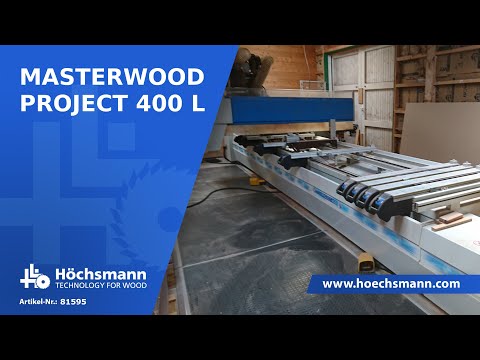
Höchsmann GmbH - Technology for Wood

Höchsmann GmbH - Technology for Wood
Community Discussions
Links to community discussions. Summaries are editorial — visit the original thread for full context.