Hyundai WIA LM2200TTSYY/TTSYYC
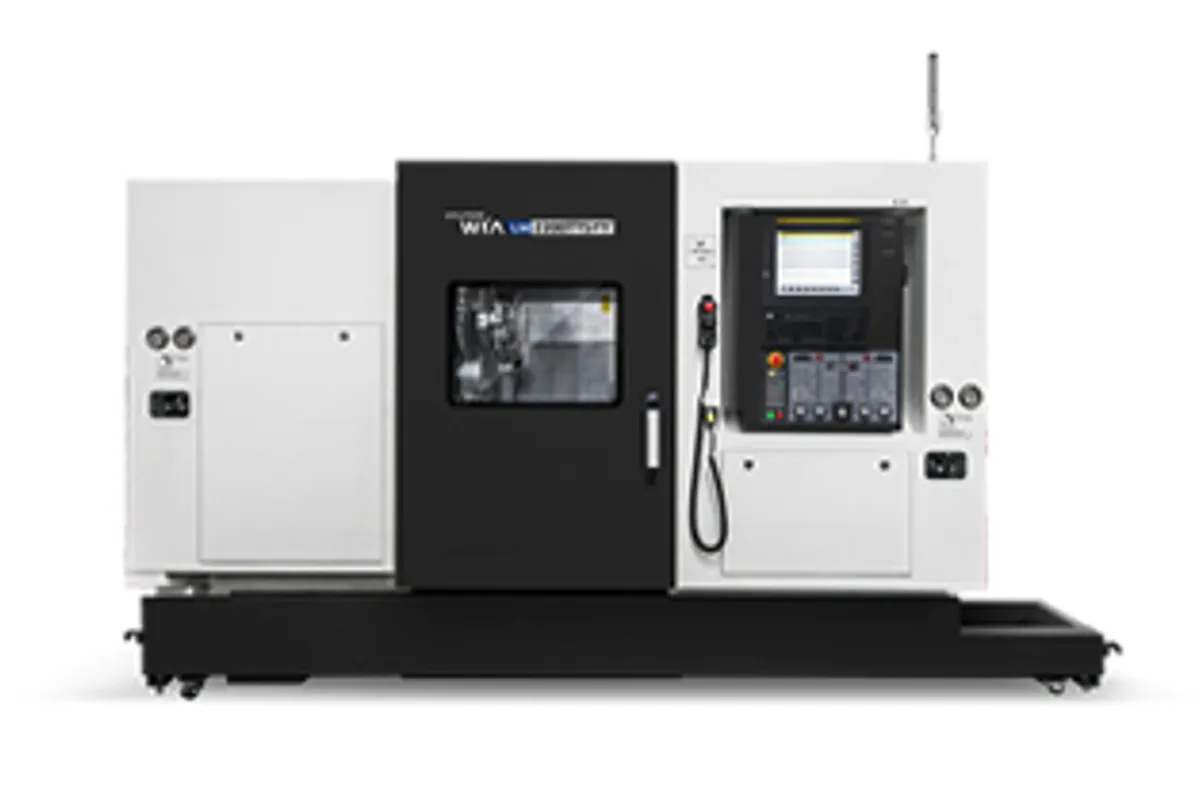
Image: wiamachine.com, Hyundai WIA
Key Specifications
Tool Capacity
Rapid Traverse
Spindle Power
main chuck size
sub spindle chuck
spindle drive
How much does the Hyundai WIA LM2200TTSYY/TTSYYC cost?
Estimated price range
Our best estimate for a cnc lathes / turning center in this class — not a quote from Hyundai WIA. Configuration moves it a long way.
Overview
The Hyundai WIA LM2200TTSYY/TTSYYC is a pair of twin-spindle, twin-turret turning centers in which both turrets have a Y axis: the upper turret is listed as 12 stations with a Y1 axis and the lower as 12 stations with a Y2 axis. The two models differ at the main chuck, 8 in on the LM2200TTSYY and 10 in on the LM2200TTSYYC. The sub-spindle chuck is 8 in on both.
A second Y axis removes the usual restriction of this layout, where one turret mills and the other only turns. Either turret can put a driven tool off centre, so a keyway can be cut at the main spindle while a bolt pattern is drilled at the sub-spindle, and milling time is shared instead of queued. Rotary tools run to 5,000 min-1.
The axis set is symmetrical. X1 and X2 each travel 165 mm (6.5 in), Y1 and Y2 each 100 mm (3.9 in), and Z1 and Z2 each 700 mm (27.6 in). Hyundai WIA lists rapids of 20 m/min on X1, 10 m/min on the Y axes and 36 m/min on Z1 and Z2. Maximum machining diameter is 230 mm for both models, so the 10 in chuck of the LM2200TTSYYC buys grip on larger stock, not a larger turned diameter in this table.
Spindle power is 18.5 / 15 kW through a belt drive, and the tool size row reads 20 / 32 mm. The table states no spindle speed and no torque for either model, which matters most with the 10 in chuck: ask for both before committing to heavy first-operation cuts. The LM1800TTSY, by comparison, is listed at 22 / 11 kW (29.5 / 14.8 hp) with 358 / 118 N·m (264.1 / 87 ft-lbf) and a 5,000 rpm spindle.
Full Specifications
| Parameter | Value |
|---|---|
| Main Chuck Size | 8" TTSYY / 10" TTSYYC |
| Sub Spindle Chuck | 8" (both variants) |
| Spindle Motor Power | 18.5 / 15 kW |
| Spindle Drive | Belt |
| Upper Turret | 12 stations with Y1-axis |
| Lower Turret | 12 stations with Y2-axis |
| Total Tool Stations | 2 x 12 (24 total) |
| Travel X1 | 165 mm (6.5 in) |
| Travel Y1 | 100 mm (3.9 in) |
| Travel Z1 | 700 mm (27.6 in) |
| Travel X2 | 165 mm (6.5 in) |
| Travel Y2 | 100 mm (3.9 in) |
| Travel Z2 | 700 mm (27.6 in) |
| Rapid Traverse Rate | 20/10/36/20/10/36/36 m/min X1/Y1/Z1/X2/Y2/Z2/ZB |
| Chuck Size | LM2200TTSYY: 8 in; LM2200TTSYYC: 10 in |
| Max Machining Diameter | 230 mm |
| Rapid Traverse X1 Z1 Y X2 Z2 A | LM2200TTSYY: 20 / 36 / 10 / 26 / 36 / 10 m/min; LM2200TTSYYC: 20 / 36 / 10 / 20 / 36 / 10 m/min |
| Rotary Tool Speed Max | 5,000 min-1 |
| Spindle Drive Type | Belt |
| Tool Capacity | 2 x 12 |
| Tool Size | 20 / 32 mm |
| Travel X1 Z1 Y X2 Z2 A | 165 / 700 / 100 / 165 / 700 / 100 mm |
| Catalogue Models | LM2200TTSYY, LM2200TTSYYC |
Specifications sourced from wiamachine.com — verified 2026-10-03
Strengths & Limitations
Strengths
- Y axis on both turrets, Y1 on the upper and Y2 on the lower, each with 100 mm (3.9 in) of travel
- Choice of main chuck: 8 in on the LM2200TTSYY or 10 in on the LM2200TTSYYC, with an 8 in sub-spindle chuck on both
- Symmetrical travels: 165 mm (6.5 in) on X1 and X2, 700 mm (27.6 in) on Z1 and Z2
- 2 x 12 tool stations with rotary tools to 5,000 min-1
- 36 m/min rapids on Z1 and Z2
Limitations
- Maximum machining diameter is 230 mm on both models, so the 10 in chuck does not bring a larger turning envelope in the table
- The top power figure of 18.5 kW is below the 22 kW in the LM1800TTSY listing of 22 / 11 kW (29.5 / 14.8 hp)
- Y rapid is 10 m/min against 36 m/min on the Z axes
- The table gives no spindle speed or spindle torque for either model
- 12 stations per turret; the LM2500TTSY II is listed with 2×24 (BMT65) tools
Best For
Frequently Asked Questions
01
The main chuck. The LM2200TTSYY has an 8 in main chuck and the LM2200TTSYYC a 10 in one, and both have an 8 in sub-spindle chuck. Travels, the 2 x 12 turret arrangement, the 18.5 / 15 kW spindle power and the 230 mm maximum machining diameter are listed the same for both.
02
Yes. The upper turret is listed as 12 stations with a Y1 axis and the lower turret as 12 stations with a Y2 axis. Each Y axis travels 100 mm (3.9 in) and rapids at 10 m/min, and rotary tools run to 5,000 min-1.
03
X1 and X2 travel 165 mm (6.5 in), Y1 and Y2 travel 100 mm (3.9 in), and Z1 and Z2 travel 700 mm (27.6 in). The upper and lower axis sets are the same size, so a tool reaches equally far from either turret.
04
Spindle power is listed at 18.5 / 15 kW with a belt drive. The table does not give spindle speed or torque for either model. For comparison, the LM1800TTSY is listed at 22 / 11 kW (29.5 / 14.8 hp), 5,000 rpm and 358 / 118 N·m (264.1 / 87 ft-lbf).
05
2 x 12: twelve stations on the upper turret and twelve on the lower, for 24 stations in total. The tool size row reads 20 / 32 mm. The LM2500TTSY II is the listed alternative with more stations, at 2×24 (BMT65) tools.
More from Hyundai WIA
Other CNC Lathes / Turning Centers
Johnford ST-100DX
SYIL L3
DN Solutions PUMA 4100 XLMC

DN Solutions LYNX 2100G
You Ji YV200