Hyundai WIA L300MC/LMC/MSC
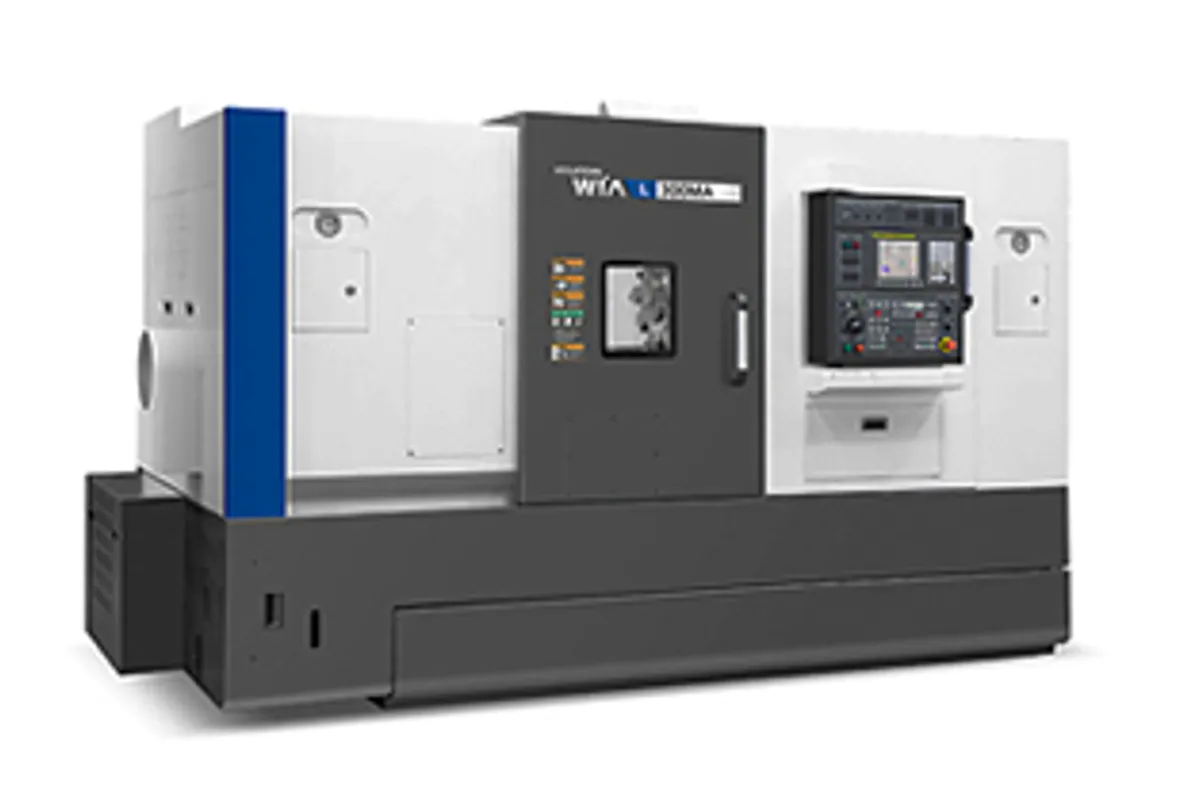
Image: wiamachine.com, Hyundai WIA
Key Specifications
Tool Capacity
Spindle Power
spindle drive
rapid traverse x
rapid traverse z
chuck size
How much does the Hyundai WIA L300MC/LMC/MSC cost?
Estimated price range
Our best estimate for a cnc lathes / turning center in this class — not a quote from Hyundai WIA. Configuration moves it a long way.
Overview
The Hyundai WIA L300MC/LMC/MSC covers the belt-driven 12 in chuck models of the L300 line. Hyundai WIA lists 22 / 18.5 kW of spindle power, 787.3 / 465 Nm of torque, a maximum machining diameter of 500 mm and 12 tools for three models: L300MC, L300LMC and L300MSC.
Look at the torque pair first. Its second figure is about 41% below the first, a far wider gap than on the geared L300C/LC, which lists 1,131 / 957 Nm. The table does not label the pair. Taken as a short-time and a continuous rating, which is the common convention, it describes a spindle that is strong for a brief heavy cut and noticeably weaker when held in a long one. Size roughing passes on 465 Nm.
The group sits between two neighbours. The L300A/MA/MSA lists the same 22 / 18.5 kW with a 10 in chuck, so this group is the step to a larger chuck without a larger motor. The L300C/LC keeps the 12 in chuck and adds power and diameter, 26 / 22 kW and 560 mm, through a gear drive.
Rapids are 20 m/min (787 ipm) in X and 24 m/min (945 ipm) in Z for every model, and the L300MSC shows a further 20 m/min figure for an additional axis whose name and travel are not given. Travels, machining length and spindle speed are all missing from the table, and nothing in it distinguishes the L300MC from the L300LMC. Those rows need to be supplied by Hyundai WIA before the three can be compared properly.
Full Specifications
| Parameter | Value |
|---|---|
| Spindle Motor Power | 22 / 18.5 kW |
| Spindle Drive | Belt |
| Rapid Traverse X | 20 m/min (787 ipm) |
| Rapid Traverse Z | 24 m/min (945 ipm) |
| Chuck Size | 12 in |
| Max Machining Diameter | 500 mm |
| Rapid Traverse Xz | L300MC: 20 / 24 m/min; L300LMC: 20 / 24 m/min; L300MSC: 20 / 24 / 20 m/min |
| Spindle Drive Type | Belt |
| Spindle Torque | 787.3 / 465 Nm |
| Tool Capacity | 12 |
| Catalogue Models | L300MC, L300LMC, L300MSC |
Specifications sourced from wiamachine.com — verified 2026-10-03
Strengths & Limitations
Strengths
- 12 in chuck with a 500 mm maximum machining diameter
- 787.3 Nm of peak spindle torque from a belt-driven 22 / 18.5 kW spindle
- Larger chuck than the L300A/MA/MSA, which lists 10 in at the same spindle power
- 12 tools, and rapids of 20 m/min (787 ipm) in X and 24 m/min (945 ipm) in Z on all three models
Limitations
- Torque drops from 787.3 Nm to 465 Nm between the two listed ratings, about 41% lower
- The geared L300C/LC lists 1,131 / 957 Nm and 560 mm of machining diameter with the same 12 in chuck
- No travels, machining length or spindle speed are listed
- The third rapid figure on the L300MSC, 20 / 24 / 20 m/min, belongs to an axis the table does not name
Best For
Frequently Asked Questions
01
787.3 / 465 Nm, with 22 / 18.5 kW through a belt drive. The pair is unlabelled in Hyundai WIA's table. If the lower value is the continuous rating, as is usual, then sustained cuts should be planned on 465 Nm and the higher value kept for short heavy passes.
02
The L300C/LC, which lists 1,131 / 957 Nm and 26 / 22 kW through a gear drive against 787.3 / 465 Nm and 22 / 18.5 kW here, and machines 560 mm where this group machines 500 mm. Both use a 12 in chuck and carry 12 tools, so the belt-driven group is the choice when that torque is not needed.
03
Very little in the table. All three share the spindle, the 12 in chuck, 500 mm of machining diameter and 12 tools. The L300MC and L300LMC both list 20 / 24 m/min rapids and no travels, so their difference is not shown. The L300MSC lists 20 / 24 / 20 m/min, which indicates an extra axis.
04
500 mm, on a 12 in chuck. The L300C/LC, the geared 12 in model, reaches 560 mm. Machining length is not listed for this group, so ask for it together with the Z travel of each model.
More from Hyundai WIA
Other CNC Lathes / Turning Centers
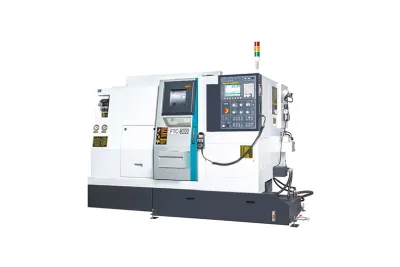
Feeler FTC-300

Citizen Miyano ABX-64SYY2
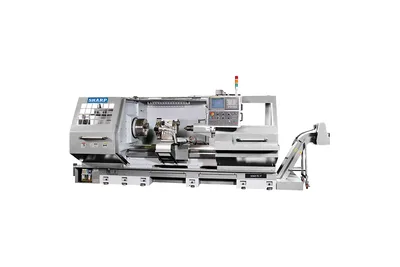
Sharp 30160TC-F
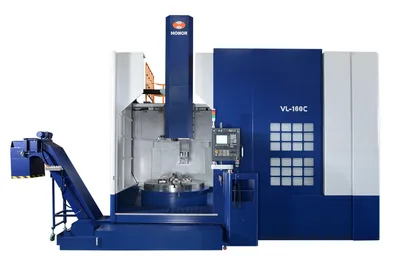
Honor Seiki VL-160C
Ecoca MT-108MA