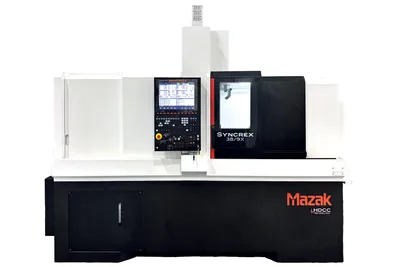
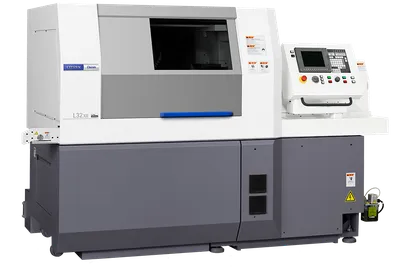
Citizen Cincom L32
This model was not found in Citizen Machinery's current lineup when we checked on 2026-10-02 (lineup page). It may be a superseded or older model; the specifications below are as we last recorded them.
Key Specifications
max bar capacity
max machining diameter
max machining length
main spindle speed
back spindle speed
gang rotary tool speed
How much does the Citizen Cincom L32 cost?
Estimated price range
Our best estimate for a swiss-type lathe in this class — not a quote from Citizen Machinery. Configuration moves it a long way.
Overview
The Citizen Cincom L32 is a 32 mm (1.25 in) sliding-headstock lathe from Citizen's L line, listed here without a generation number. It is not in Citizen's current lineup and its table has not been checked against a manufacturer source, so read the listed figures as a starting point for inspecting a used machine.
The L32 name covered several builds, and the axis row shows how far apart they are: 7 axes on the VIII, 8 on the X and 9 on the XII, which adds a B-axis. Tool positions are listed as 24-44 depending on configuration. A buyer therefore needs to know which generation a machine is before judging what it can make; a B-axis XII and a 7-axis VIII are very different propositions for parts with angled features.
The common figures are the bar and the spindle. Bar capacity is 32 mm, with 38 mm optional, and the headstock machines 320 mm (12.6 in) per chucking. The main spindle runs to 8,000 RPM and the gang rotary tools to 6,000 RPM. The guide bushing is standard and a non-guide-bushing option is listed; LFV chip breaking is listed as available rather than standard.
For installation the listed figures are 2,500 kg (5,512 lb) and 11 kVA, and the control is Mitsubishi Meldas 70LPC with Citizen software. The back-spindle speed appears twice in the table with different values, so confirm it on the machine.
Full Specifications
| Parameter | Value |
|---|---|
| Max Bar Capacity | 32 mm (1.25 in) |
| Max Machining Diameter | 32 mm (1.25 in) [38 mm optional] |
| Max Machining Length | 320 mm (12.6 in) per chucking |
| Main Spindle Speed | 8,000 RPM |
| Back Spindle Speed | 8,000 RPM |
| Gang Rotary Tool Speed | 6,000 RPM |
| Number of Axes | 7 (VIII) / 8 (X) / 9 (XII with B-axis) |
| Tool Positions | 24-44 (configuration dependent) |
| B Axis | Available on L32 XII |
| Guide Bushing | Yes (standard) / Non-guide bushing option |
| Lfv Chip Breaking | Available |
| Machine Weight | 2,500 kg (5,512 lb) |
| Power Consumption | 11 kVA |
| CNC Control | Mitsubishi Meldas 70LPC (Citizen software) |
| Max Bar Diameter | 32 mm (1.26 in) |
| Max Part Length | 200 mm (7.87 in) with guide bushing |
| Sub Spindle Speed | 10,000 rpm |
| Live Tools | Yes — driven tools on gang plate and B-axis |
| Live Tool Speed | 6,000 rpm (standard) / 12,000 rpm (high-speed option) |
Specifications compiled from manufacturer literature and industry references. Not independently verified against a published spec sheet — confirm with the manufacturer or an authorised dealer before making a purchasing decision.
Strengths & Limitations
Strengths
- 32 mm (1.25 in) bar capacity, 38 mm optional
- 320 mm (12.6 in) machining length per chucking
- B-axis available on the L32 XII for angled work
- Tool positions listed at 24-44 depending on configuration
- Listed at 2,500 kg (5,512 lb) and 11 kVA, modest figures for a 32 mm machine
Limitations
- Unchecked table covering several generations; axis count runs from 7 to 9 depending on build
- Main spindle limited to 8,000 RPM
- Gang rotary tools listed at 6,000 RPM
- LFV chip breaking is listed as available, so it may not be fitted to a given machine
Best For
Frequently Asked Questions
01
The listed figures separate them by axis count: 7 axes on the VIII, 8 on the X and 9 on the XII, which is the one with a B-axis. Tool positions range from 24 to 44 depending on configuration. Identify the build from the model plate before comparing machines.
02
32 mm (1.25 in) as listed, with 38 mm optional. Machining length is 320 mm (12.6 in) per chucking, which is the stroke per grip of the bar rather than a limit on finished part length.
03
The table lists LFV chip breaking as available, not standard. On a used machine, check whether the function is enabled in the control before counting on it for stringy materials.
04
The listed weight is 2,500 kg (5,512 lb) and the power figure 11 kVA. The control is Mitsubishi Meldas 70LPC with Citizen software, which matters for programming and for sourcing spare parts on an older machine.
Videos

Citizen Machinery UK

Citizen Machinery UK

Citizen Machinery Europe
Kremin Inc. Manufacturing
Community Discussions
Troubleshooting and problem-solving
Links to community discussions. Summaries are editorial — visit the original thread for full context.
More from Citizen Machinery
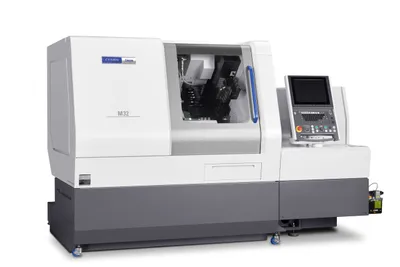
Other Swiss-Type Lathes
Mazak SYNCREX 25/8
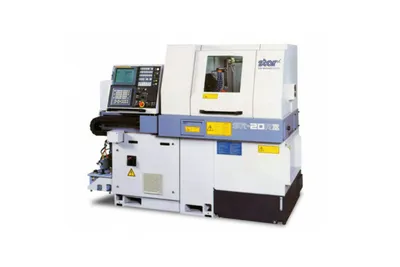
Star SR-20R II

Tsugami B0125-VR
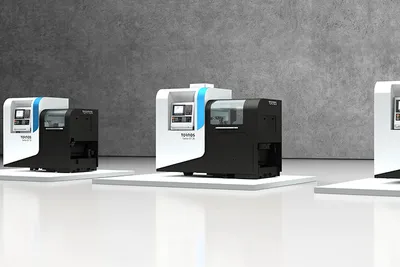
Tornos Swiss GT 26
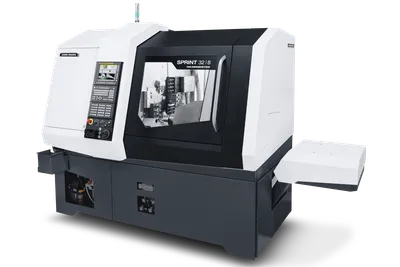
DMG Mori SPRINT 32|10